Gear Material Selection: How to Choose the Right Material for Custom Gear Manufacturing
Choosing the right material is one of the most important decisions in custom gear manufacturing. A gear may have perfectly designed teeth and accurate dimensions, but if its material cannot withstand the operating conditions, its performance and service life may be compromised.
Industrial gears operate under different mechanical and environmental conditions. Some transmit high torque in heavy-duty gearboxes, while others operate at relatively low loads in automation equipment, agricultural machinery, and general industrial systems.
This is why gear material selection should consider more than price. Strength, hardness, wear resistance, fatigue performance, corrosion resistance, machinability, and heat treatment requirements all influence the final material choice.
For overseas buyers sourcing custom gears from China, understanding the characteristics of different gear manufacturing materials can help reduce sourcing risks and improve component performance.
In this guide, Changzhou Qiming Precision Machinery explains how to select suitable materials for custom industrial gears, compares commonly used materials, and highlights the key technical factors buyers should discuss with their manufacturing suppliers.
Contact Us – Changzhou Qiming Precision Machinery Co., Ltd
1. Why Is Material Selection Important in Gear Manufacturing?
Gears transmit mechanical power through repeated contact between their teeth. During operation, gear teeth experience different types of mechanical stress, including bending stress, contact stress, friction, and cyclic loading.
The selected material directly affects how a gear responds to these conditions.
The main factors to consider include:
Strength: Determines the material’s ability to withstand applied mechanical loads without excessive deformation or failure.
Hardness: Influences resistance to indentation, surface deformation, and wear.
Toughness: Helps a material withstand impact and resist sudden fracture.
Wear Resistance: Important for gear teeth exposed to repeated sliding and rolling contact.
Fatigue Resistance: Helps the gear withstand repeated loading over many operating cycles.
Corrosion Resistance: Matters when gears operate in humid, wet, or chemically aggressive environments.
Machinability: Influences manufacturing processes, production time, and machining costs.
A suitable gear material should balance these properties according to the actual working conditions rather than maximizing one property at the expense of everything else.
2. Common Materials Used in Custom Gear Manufacturing
Different materials offer different advantages. The following are commonly considered in industrial gear material selection.
Products – Changzhou Qiming Precision Machinery Co., Ltd
2.1 Carbon Steel Gears
Carbon steel is widely used in mechanical manufacturing because of its availability, machinability, and range of mechanical properties.
Depending on the carbon content and heat treatment condition, carbon steel can be suitable for various general-purpose mechanical components and gear applications.
Advantages:
- Good machinability in suitable material conditions.
- Relatively economical compared with many alloy steels.
- Available in different grades and mechanical conditions.
- Suitable for various general industrial applications.
Typical Applications:
General industrial machinery, low-to-moderate load transmission components, and selected custom mechanical gears.
However, not every carbon steel grade is suitable for heavy-duty gears. Buyers should confirm the required strength, hardness, and heat treatment condition before specifying a material.
2.2 Alloy Steel Gears
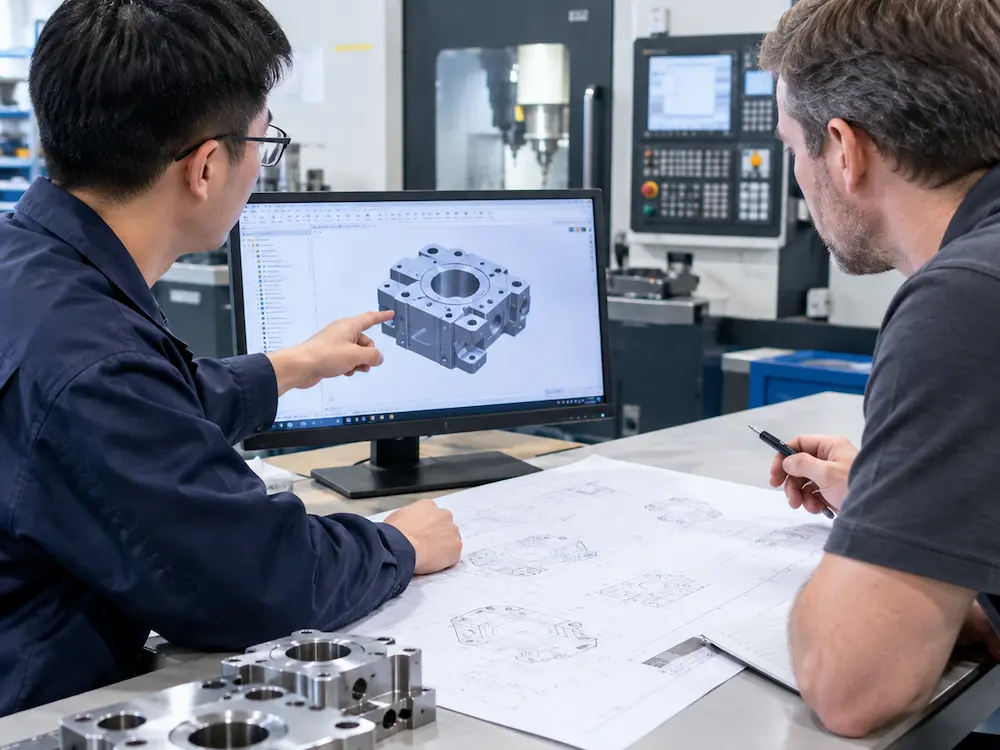
Alloy steel is an important material category for industrial gear manufacturing, especially where higher strength, toughness, and wear resistance are required.
Alloying elements such as chromium, molybdenum, nickel, and manganese can influence hardenability and mechanical properties.
Two commonly referenced gear-related steel grades are 20MnCr5 and 42CrMo4.
20MnCr5 Case-Hardening Steel
20MnCr5 is a case-hardening steel commonly used for components requiring a hard surface and a tougher core after appropriate heat treatment.
It is suitable for consideration in certain gears, shafts, and transmission components where surface durability is important.
42CrMo4 Alloy Steel
42CrMo4 is a chromium-molybdenum alloy steel known for its strength and toughness in suitable heat-treated conditions.
It is commonly used in highly stressed mechanical components, including transmission shafts and selected gear applications.
The two materials are not interchangeable. Their suitability depends on gear design, loading conditions, manufacturing route, and required surface and core properties.
2.3 Stainless Steel Gears
Stainless steel is considered when corrosion resistance is an important requirement.
It may be suitable for equipment exposed to moisture, cleaning processes, or certain corrosive environments.
Advantages:
- Corrosion resistance in suitable environments.
- Different grades available for different applications.
- Useful in selected food-processing and industrial equipment.
- Can reduce corrosion-related maintenance requirements.
However, stainless steel does not automatically provide better gear performance than alloy steel.
Some stainless steel grades have different hardness, wear, and heat treatment characteristics. The specific grade must be evaluated according to the operating conditions.
2.4 Bronze and Brass Gears
Copper-based alloys, particularly bronze, are important in certain gear applications.
Bronze is frequently considered for worm wheel applications because of its sliding-contact characteristics and compatibility with suitable lubrication systems.
Brass may also be used in selected light-duty mechanical components.
Advantages:
- Useful sliding and wear characteristics in suitable applications.
- Good corrosion resistance in many environments.
- Good machinability for selected grades.
- Suitable for certain non-ferrous transmission components.
For worm gear systems, bronze is often paired with a steel worm. The final combination should be evaluated based on load, speed, lubrication, temperature, and expected operating life.
2.5 Engineering Plastic Gears
Engineering plastics provide an alternative to metal gears in applications where low weight, noise reduction, and corrosion resistance are important.
Common engineering plastics used in gear-related applications include:
- POM (Acetal)
- Nylon (PA)
- PEEK
- Other application-specific engineering polymers
Advantages:
- Lightweight construction.
- Relatively quiet operation.
- Corrosion resistance.
- Potentially reduced lubrication requirements in selected applications.
However, plastic gears have different mechanical and thermal limitations from metal gears. Temperature, moisture absorption, creep, deformation, and allowable loading must be evaluated carefully.
They are commonly considered for lightweight mechanisms, consumer equipment, and selected automation applications rather than all heavy-duty power transmission systems.
3. Comparison of Common Gear Manufacturing Materials
The following table provides a practical comparison for overseas buyers evaluating custom gear manufacturing materials.
| Material | Main Advantages | Potential Limitations | Typical Applications |
|---|---|---|---|
| Carbon Steel | Economical, machinable, versatile | May require additional hardening or protection | General industrial gears |
| Alloy Steel | Strength, toughness, heat-treatment options | Higher material and processing costs | Heavy-duty transmission components |
| Stainless Steel | Corrosion resistance | Grade-dependent hardness and wear performance | Corrosive or moisture-exposed environments |
| Bronze | Suitable sliding characteristics | Higher material cost than many steels | Worm wheels and selected transmissions |
| Brass | Good machinability | Limited suitability for high-load applications | Light-duty mechanical components |
| Engineering Plastics | Lightweight and quiet operation | Temperature, creep, and load limitations | Low-load and noise-sensitive mechanisms |
There is no universally best material for every gear. The correct choice depends on the combination of mechanical loads, environmental conditions, manufacturing requirements, and budget.
4. Real Material Data: Understanding 42CrMo4 and 20MnCr5
For buyers who require more technical information, examining actual material specifications can help clarify the differences between common gear steels.
42CrMo4: Chromium-Molybdenum Alloy Steel
42CrMo4, also identified by material number 1.7225, is a widely used alloy steel for highly stressed mechanical components.
Its chemical composition typically includes:
| Chemical Element | Typical Specification (Mass %) |
|---|---|
| Carbon (C) | 0.38–0.45 |
| Silicon (Si) | ≤0.40 |
| Manganese (Mn) | 0.60–0.90 |
| Chromium (Cr) | 0.90–1.20 |
| Molybdenum (Mo) | 0.15–0.30 |
According to a published material datasheet for 42CrMo4, the tensile strength range in the quenched-and-tempered condition is approximately 750–1,300 MPa, depending on the product condition and dimensions.
This illustrates why 42CrMo4 is considered for demanding mechanical applications. However, the actual properties must be confirmed against the material standard, delivery condition, cross-section, and supplier’s material certificate.
20MnCr5: Case-Hardening Steel
20MnCr5 is another important gear-related steel grade.
According to thyssenkrupp Steel’s published product information, its typical chemical composition includes:
| Chemical Element | Typical Specification (Mass %) |
|---|---|
| Carbon (C) | 0.17–0.22 |
| Silicon (Si) | ≤0.40 |
| Manganese (Mn) | 1.10–1.40 |
| Chromium (Cr) | 1.00–1.30 |
20MnCr5 is designed for case-hardening applications. After suitable processing, it can provide a wear-resistant surface while retaining a comparatively tougher core.
This combination makes it relevant to gears and other transmission components exposed to repeated contact loads.
Important: These figures are reference specifications, not guaranteed properties of every delivered batch. Buyers should request material certificates and specify the applicable standard and delivery condition.
5. How to Choose the Right Gear Material for Your Application
Material selection should start with the actual operating conditions of the gear.
Here are six important questions to consider before confirming a material specification.
1. What Load Will the Gear Transmit?
Heavy-duty gears may require materials with suitable strength, toughness, and fatigue resistance.
For lower-load applications, carbon steel, bronze, or engineering plastics may be more economical choices depending on the design.
2. What Is the Operating Speed?
High-speed applications may require careful evaluation of tooth contact, heat generation, lubrication, and surface durability.
Material selection should be considered together with the gear design and transmission system.
3. Is Surface Hardness Important?
If gear teeth are exposed to repeated contact and wear, a suitable case-hardening or surface-hardening process may be considered.
The material and heat treatment should be selected as a complete manufacturing solution.
4. Will the Gear Operate in a Corrosive Environment?
For applications involving moisture, cleaning chemicals, or corrosive exposure, stainless steel or suitable protective treatments may be considered.
The exact environmental conditions should be specified because corrosion resistance varies significantly between material grades.
5. What Are the Temperature and Lubrication Conditions?
Operating temperature and lubrication affect material performance and wear behavior.
This is particularly important for plastic gears and worm gear systems.
6. What Is the Required Production Quantity and Budget?
Material availability, machining difficulty, heat treatment, and finishing operations can all affect manufacturing costs.
Buyers should compare the total production solution rather than selecting the lowest raw material price.
6. What Information Should You Provide When Ordering Custom Gears?
A reliable custom gear manufacturing project begins with clear technical communication.
When contacting a gear manufacturer in China, provide the following information whenever possible.
| Required Information | Details to Provide |
|---|---|
| Gear Type | Spur, helical, bevel, worm, or custom design |
| Material Grade | 20MnCr5, 42CrMo4, carbon steel, stainless steel, etc. |
| Engineering Drawings | 2D PDF, DWG, or 3D STEP files |
| Module and Tooth Count | Gear module and number of teeth |
| Dimensions | Outside diameter, bore, face width, and other key dimensions |
| Mechanical Requirements | Strength, hardness, and operating loads |
| Heat Treatment | Required process and hardness specifications, if applicable |
| Quantity | Prototype, small batch, or production order |
| Application | Gearbox, industrial machinery, agricultural equipment, etc. |
If you are unsure which material to choose, provide the application details and operating conditions first.
A manufacturing supplier can then review the available information and discuss potential material and manufacturing options.
Why Choose Changzhou Qiming Precision Machinery for Custom Gear Projects?
Selecting the right material is only one part of a successful gear manufacturing project. Buyers also need a supplier who understands mechanical components, technical drawings, and project requirements.
Changzhou Qiming Precision Machinery focuses on industrial mechanical components, including gears, gear reducers, bearings, transmission parts, and custom machinery parts processing.
Our business serves customers looking for industrial components based on specific drawings, dimensions, and technical requirements.
1. Focus on Industrial Mechanical Components
Our product range includes gears and related transmission components, providing an industrial sourcing direction for equipment manufacturers and international buyers.
2. Drawing-Based Custom Manufacturing Discussions
We welcome inquiries supported by engineering drawings, material specifications, and dimensional requirements.
This allows technical requirements to be discussed before quotation and production planning.
3. Related Transmission Component Categories
In addition to gears, our business covers gear reducers, bearings, and other mechanical transmission parts.
This helps buyers discuss related component sourcing requirements with a supplier familiar with industrial mechanical products.
4. International Customer Communication
We understand that overseas procurement requires clear specifications, accurate quotation information, and effective communication throughout the project.
5. Long-Term Manufacturing Cooperation
Whether you are sourcing a new custom gear component or evaluating suppliers for future mechanical parts projects, we welcome discussions about your requirements.
Conclusion
Choosing the right material for custom gear manufacturing requires a balance between mechanical performance, operating conditions, manufacturing processes, and overall cost.
Carbon steel may be suitable for general industrial applications, alloy steel is frequently considered for demanding transmission components, stainless steel offers corrosion resistance, bronze is useful in selected worm gear systems, and engineering plastics can provide lightweight and quiet operation.
The most suitable material is not necessarily the strongest or most expensive one. It is the material that meets the actual requirements of the application while supporting reliable manufacturing and reasonable sourcing costs.
If you are looking for a custom gear manufacturer in China, Changzhou Qiming Precision Machinery welcomes inquiries about gears, gear reducers, bearings, and industrial transmission components.
Send us your engineering drawings, material requirements, and project details to discuss your next custom gear manufacturing project.
Frequently Asked Questions (FAQ)
1. What is the best material for industrial gears?
There is no single best material for every industrial gear. Alloy steel is frequently considered for high-load transmission applications, carbon steel for general-purpose components, stainless steel for corrosion resistance, bronze for selected worm gear applications, and engineering plastics for lightweight and low-noise mechanisms.
2. Which steel is commonly used for custom gear manufacturing?
Commonly referenced gear steels include 20MnCr5, 16MnCr5, 42CrMo4, and other carbon and alloy steel grades. The appropriate choice depends on gear design, loading conditions, hardness requirements, and heat treatment.
3. What is the difference between 20MnCr5 and 42CrMo4?
20MnCr5 is a case-hardening steel designed to develop a hard surface and a tougher core after appropriate treatment. 42CrMo4 is a chromium-molybdenum alloy steel commonly used in quenched-and-tempered mechanical components. They serve different engineering purposes and should not be treated as direct substitutes.
4. Is stainless steel suitable for gear manufacturing?
Yes. Stainless steel can be suitable when corrosion resistance is important. However, the specific grade must be selected according to strength, hardness, wear resistance, and operating conditions.
5. Why is bronze used in worm gears?
Bronze is frequently used for worm wheels because of its sliding-contact characteristics and suitability for certain lubrication systems. The final material combination depends on load, speed, lubrication, and operating temperature.
6. Are plastic gears suitable for industrial applications?
Yes, in selected applications. Engineering plastics such as POM, nylon, and PEEK can be used where low weight, reduced noise, and corrosion resistance are important. Their temperature limits, creep behavior, and load capacity must be evaluated carefully.
7. Does heat treatment improve gear performance?
Appropriate heat treatment can improve hardness, wear resistance, and mechanical properties. Processes such as carburizing, induction hardening, and quenching and tempering are used for different material and application requirements.
8. What information is needed to request a custom gear quotation?
Buyers should provide gear drawings, material grades, module, number of teeth, dimensions, tolerance requirements, heat treatment specifications, order quantity, and application details. Complete technical information helps manufacturers evaluate feasibility and prepare more accurate quotations.
9. Can a manufacturer help me select the right gear material?
A qualified manufacturing partner can review your drawings, operating conditions, and performance requirements and discuss suitable material options. Final material selection should be confirmed by the responsible engineering team based on the complete gear design.
10. How can I start a custom gear manufacturing project with Changzhou Qiming Precision Machinery?
Send our team your engineering drawings, material requirements, technical specifications, and estimated order quantity. We welcome inquiries about custom gears, gear reducers, bearings, and industrial mechanical components.