What Are Gears Used For? 10 Industrial Gear Applications
What Are Gears Used For?
Gears are fundamental mechanical components used to transmit rotational motion, transfer torque, change speed, change rotational direction, and synchronize mechanical movement.
From industrial gearboxes and conveyors to pumps, machine tools, agricultural equipment, automotive systems, and automated production lines, gears are used whenever controlled mechanical power needs to move from one component to another.
The global industrial machinery market includes millions of machines that rely on mechanical power transmission, and gears remain one of the most important components in these systems.
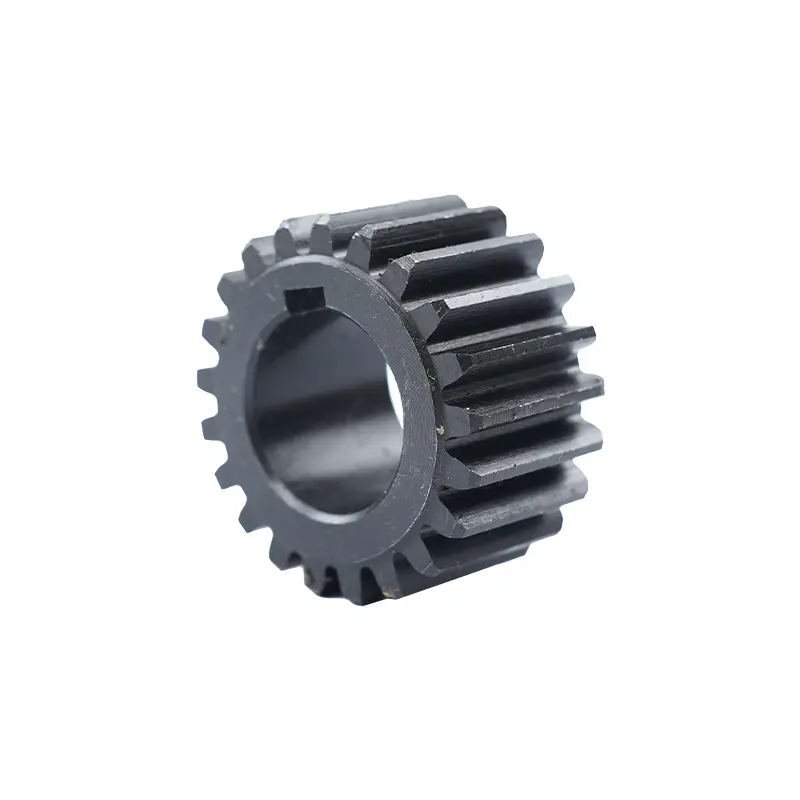
For equipment manufacturers and overseas buyers, understanding gear applications is essential when selecting the right gear type, material, accuracy level, and manufacturing process.
Different applications require different solutions. A high-speed gearbox may require precision helical gears, while a simple conveyor may use spur gears or sprockets. A right-angle transmission may require bevel gears, while a compact industrial reducer may use planetary gearing.
This guide explains 10 common industrial gear applications, the gear types typically used, and what OEM buyers should consider when sourcing custom gears.
What Do Gears Actually Do?
At the most basic level, gears transfer mechanical power between rotating shafts.
A gear system can perform several functions:
- Transfer torque
- Increase or reduce rotational speed
- Change rotational direction
- Change the axis of rotation
- Synchronize rotating components
- Control mechanical motion
- Increase mechanical advantage
- Transfer power between shafts at different positions
The relationship between gear speed and tooth count can be expressed simply:
Gear Ratio = Number of Teeth on Driven Gear ÷ Number of Teeth on Driving Gear
For example, if a 20-tooth gear drives a 60-tooth gear, the theoretical speed ratio is:
60 ÷ 20 = 3:1
The driven gear rotates at approximately one-third of the input speed while producing a corresponding increase in torque, subject to efficiency and system losses.
Custom Precision Aluminum Timing Belt Pulleys – Changzhou Qiming Precision Machinery Co., Ltd
This basic principle is behind many industrial gear applications.
10 Common Industrial Gear Applications
1. Industrial Gearboxes and Speed Reducers
One of the most important applications for gears is inside industrial gearboxes and speed reducers.
Electric motors often operate at speeds that are higher than the machinery actually requires. A gearbox uses gears to reduce speed and increase available torque.
Common gear types include:
- Spur gears
- Helical gears
- Bevel gears
- Worm gears
- Planetary gears
A typical power transmission system may look like:
Electric Motor → Gearbox → Output Shaft → Industrial Equipment
Gearboxes are widely used in conveyors, mixers, pumps, compressors, production machinery, lifting equipment, and other industrial systems.
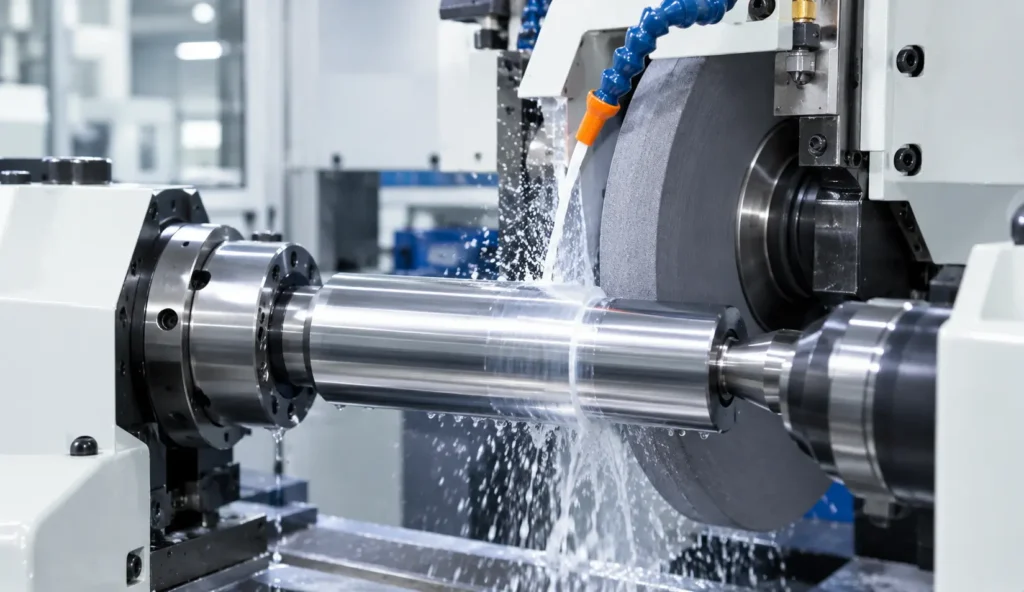
For OEM buyers, gearbox gears must be designed around the required torque, speed, duty cycle, gear ratio, available space, and expected service life.
2. Conveyor Systems
Industrial conveyors use gears and related power-transmission components to move materials continuously through factories, warehouses, mines, ports, and production facilities.
Gears can be used inside:
- Conveyor drives
- Gear reducers
- Drive mechanisms
- Roller systems
- Automated material-handling equipment
Conveyor systems often operate for long periods, so gear reliability and wear resistance are important.
For continuous-duty applications, buyers should consider:
| Requirement | Why It Matters |
|---|---|
| Gear material | Influences strength and wear |
| Gear ratio | Determines speed and torque |
| Tooth accuracy | Influences smooth operation |
| Lubrication | Reduces friction and wear |
| Heat treatment | Can improve wear resistance |
| Operating hours | Determines duty requirements |
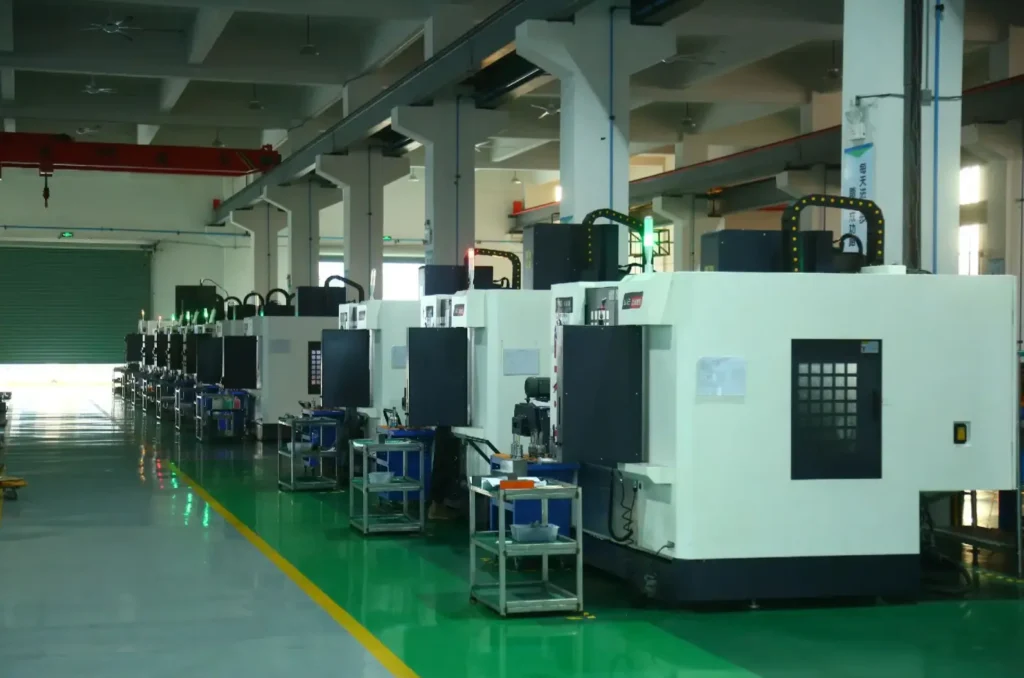
3. Machine Tools and CNC Machinery
Precision gears are widely used in machine tools and production equipment.
They can control:
- Feed mechanisms
- Rotary tables
- Tool-changing mechanisms
- Spindle systems
- Transmission systems
- Automated positioning mechanisms
In these applications, gear accuracy can be especially important because mechanical errors can influence positioning, vibration, noise, and surface quality.
For precision applications, buyers should pay attention not only to tooth count and dimensions but also to gear profile, pitch, helix, runout, backlash, and surface finish.
ISO 1328-1 provides a tolerance classification system for cylindrical involute gear flank deviations. ISO confirmed the standard remains current following review in 2024.
For OEM machinery manufacturers, using recognized gear-accuracy terminology can make technical communication with international suppliers much easier.
4. Pumps and Compressors
Gears are also used in many pump and compressor systems.
Examples include:
- Gear pumps
- Screw compressor drive systems
- Lubrication pumps
- Industrial fluid-transfer systems
- Process equipment
In a gear pump, two or more gears rotate inside a housing to move fluid through the system.
The gear geometry, clearances, surface finish, and material selection can therefore have a direct impact on leakage, efficiency, wear, and service life.
For industrial buyers, gear pump components may require specialized materials or surface treatments depending on the fluid, pressure, temperature, and operating environment.
5. Agricultural Machinery
Agricultural equipment operates in demanding environments and frequently relies on mechanical power transmission.
Gears are found in:
- Tractors
- Harvesting equipment
- Seeders
- Irrigation machinery
- Feed machinery
- Agricultural processing equipment
Agricultural gear applications may involve shock loads, dust, moisture, long operating periods, and variable loads.
For these applications, gear material, heat treatment, sealing, lubrication, and corrosion resistance should be considered together.
A gear that works well in a clean indoor production line may require a different design for agricultural equipment exposed to dirt and outdoor conditions.
6. Construction and Heavy Equipment
Construction equipment often requires high torque and durable mechanical transmission systems.
Gears can be found in:
- Excavators
- Loaders
- Cranes
- Winches
- Material-handling equipment
- Construction machinery
These applications may expose gears to high loads and intermittent shock loading.
As a result, OEM manufacturers often need gears designed around specific load conditions rather than generic catalog dimensions.
For heavy machinery, gear strength, tooth-root fatigue, material selection, heat treatment, and lubrication can all become important engineering considerations.
7. Automotive and Transportation Equipment
Although this article focuses on industrial applications, gears are also fundamental to transportation systems.
They are used in:
- Transmissions
- Differential systems
- Steering mechanisms
- Transfer cases
- Auxiliary drives
The automotive sector has particularly demanding requirements for gear noise, vibration, durability, efficiency, and dimensional consistency.
The same engineering principles are relevant to industrial transmission systems: gears must work as part of a complete mechanical system rather than as isolated components.
8. Robotics and Automation
Industrial automation increasingly depends on precise mechanical motion.
Gears are used in:
- Robot joints
- Servo-driven mechanisms
- Automated machinery
- Pick-and-place equipment
- Positioning systems
- Automated production lines
Depending on the application, manufacturers may use planetary gears, spur gears, helical gears, harmonic-drive-related gearing, or other specialized transmission mechanisms.
For robotics, backlash and positioning accuracy can become especially important.
A small amount of mechanical play may be acceptable in a general conveyor but unacceptable in a precision positioning system.
9. Packaging and Food-Processing Machinery
Packaging machines frequently contain multiple synchronized moving mechanisms.
Gears can control:
- Feed systems
- Rollers
- Cutting mechanisms
- Filling systems
- Conveyor drives
- Synchronization mechanisms
These machines may require compact gears that operate continuously and accurately.
Food-processing equipment can also introduce additional requirements related to hygiene, corrosion resistance, cleaning procedures, and material selection.
For OEM buyers, the correct gear design therefore depends on both the mechanical load and the operating environment.
10. Industrial Automation and Production Lines
Modern production lines often contain many coordinated mechanical movements.
Gears can be used in:
- Assembly machines
- Inspection equipment
- Sorting systems
- Material-handling systems
- Automated packaging equipment
- Manufacturing cells
In these applications, gears help synchronize different mechanical movements while transferring power from motors to working mechanisms.
As production systems become more automated, the requirements for repeatability, low backlash, smooth operation, and long service life can become increasingly important.
Common Gear Types and Their Applications
Different gear geometries are suited to different mechanical requirements.
| Gear Type | Common Application | Main Characteristic |
|---|---|---|
| Spur Gear | General machinery | Simple and efficient |
| Helical Gear | Gearboxes | Smooth and quieter operation |
| Bevel Gear | Right-angle drives | Changes rotation axis |
| Worm Gear | Speed reducers | High reduction ratios |
| Planetary Gear | Compact transmissions | High torque density |
| Rack and Pinion | Linear motion | Converts rotation to linear movement |
| Internal Gear | Planetary systems | Compact transmission arrangement |
| Custom Gear | Specialized machinery | Application-specific design |
The correct gear type should be selected according to speed, torque, ratio, space limitations, noise requirements, efficiency, and application.
What Materials Are Used for Industrial Gears?
Steel is widely used for industrial gears because it provides a useful combination of strength, toughness, machinability, and heat-treatment potential.
Depending on the application, gear manufacturers may also work with:
- Alloy steels
- Carbon steels
- Stainless steels
- Cast iron
- Bronze
- Engineering plastics
- Other application-specific materials
Material selection should consider:
Load + Speed + Wear + Environment + Manufacturing Process + Required Service Life
Heat treatment may also be applied when higher hardness, wear resistance, or fatigue performance is required.
Common treatments include:
- Carburizing
- Induction hardening
- Nitriding
- Quenching and tempering
The appropriate treatment should always be based on the gear material and application rather than simply selecting the hardest possible surface.
What Should Buyers Consider When Sourcing Custom Industrial Gears?
For overseas OEM buyers, a gear quotation should ideally be based on complete technical information.
Provide:
- Gear type
- Number of teeth
- Module or diametral pitch
- Pressure angle
- Helix angle, if applicable
- Gear dimensions
- Bore diameter
- Material
- Heat treatment
- Required accuracy
- Surface finish
- Quantity
- Application
- Inspection requirements
Custom Gear RFQ Checklist
| Requirement | Why It Matters |
|---|---|
| 2D drawing | Defines critical dimensions |
| 3D CAD | Helps clarify complex geometry |
| Gear parameters | Defines tooth geometry |
| Material | Determines mechanical performance |
| Quantity | Influences manufacturing economics |
| Heat treatment | Controls hardness and wear |
| Accuracy | Influences transmission performance |
| Application | Defines operating conditions |
| Inspection | Establishes acceptance criteria |
| Delivery date | Supports production planning |
If a buyer does not have a complete drawing, photographs, samples, measurements, and application information can be a starting point.
How to Choose a Custom Gear Manufacturer
Choosing a custom gear manufacturer should not be based only on price.
Overseas buyers should evaluate:
- Engineering communication
- Gear-manufacturing capability
- CNC machining capability
- Material control
- Heat-treatment support
- Inspection capability
- Quality consistency
- Prototype support
- Mass-production capability
- International communication
- Packaging and delivery
A supplier capable of manufacturing both custom gears and gear shafts can also simplify procurement when multiple components belong to the same transmission assembly.
Why Choose Changzhou Qiming Precision Machinery Co., Ltd.?
For overseas machinery manufacturers, distributors, and industrial buyers, Changzhou Qiming Precision Machinery Co., Ltd. provides customized manufacturing support for gears, gear shafts, transmission shafts, and other machinery components.
Our approach is based on the customer’s technical requirements rather than a fixed catalog.
Key advantages include:
OEM and custom manufacturing
We can work from customer drawings, CAD files, samples, and technical specifications.
Gears + shafts under one sourcing relationship
For projects involving gears, gear shafts, and transmission shafts, coordinating related components through one supplier can simplify communication and procurement.
CNC machining support
Customized mechanical components may require turning, milling, drilling, keyway machining, and other processes depending on the design.
Flexible project support
Different gear dimensions, materials, interfaces, and machining requirements can be evaluated according to the application.
B2B international cooperation
Clear technical communication, quotation, production coordination, and delivery planning are important parts of international OEM sourcing.
Focus on long-term cooperation
Our goal is not simply to supply one batch of gears. We aim to support machinery manufacturers and distributors with repeatable custom components for long-term projects.
FAQ About Gear Applications
What are gears mainly used for?
Gears are mainly used to transfer rotational motion and torque between shafts while changing speed, torque, direction, or the axis of rotation.
Where are gears used in industry?
Common industrial gear applications include gearboxes, conveyors, pumps, compressors, machine tools, agricultural machinery, construction equipment, robotics, packaging machinery, and automated production lines.
What is the most common type of industrial gear?
Spur gears are among the simplest and most widely used gear types for general mechanical power transmission. However, the most suitable gear type depends on the application.
What is the difference between spur gears and helical gears?
Spur gear teeth are parallel to the gear axis, while helical gear teeth are angled. Helical gears generally provide smoother and quieter engagement but introduce axial thrust that must be considered in the design.
What information is needed to manufacture a custom gear?
A manufacturer normally needs gear type, dimensions, tooth count, module or diametral pitch, pressure angle, material, quantity, tolerances, heat-treatment requirements, and application information.
Can Qiming manufacture custom industrial gears?
Changzhou Qiming Precision Machinery Co., Ltd. supports customized gears, gear shafts, transmission shafts, and other machinery components according to customer drawings, samples, and technical specifications.
Can gears and shafts be manufactured together?
Yes. Depending on the project, gears and shafts can be sourced as separate components or as related components within the same OEM manufacturing project. Coordinating both can simplify technical communication and assembly requirements.
How do I request a custom gear quotation?
Send a 2D drawing or 3D CAD model together with material, quantity, gear specifications, tolerances, heat treatment, inspection requirements, and application information. If you do not have a complete drawing, start with photographs, samples, or measurements.
Conclusion: Choosing the Right Gear for the Right Application
Gears are used throughout modern industry because they provide a reliable way to transfer torque, control speed, change rotational direction, and synchronize mechanical movement.
From gearboxes and conveyors to CNC machinery, agricultural equipment, construction machinery, robotics, packaging equipment, and automated production lines, different gear applications require different engineering solutions.
For OEM buyers, selecting the right gear is not simply about choosing spur, helical, bevel, or planetary gears. Material, dimensions, tooth geometry, accuracy, heat treatment, lubrication, operating speed, load, and expected service life must all be considered together.
For customized industrial gear projects, Changzhou Qiming Precision Machinery Co., Ltd. can support buyers with custom gears, gear shafts, transmission shafts, and other precision machinery components based on drawings, samples, and technical requirements.
Have a custom gear project? Send us your drawing, CAD file, or sample information to discuss your requirements and request a quotation.