CNC Gear Manufacturing Process: From Gear Cutting to Precision Inspection
Gears are essential components in modern mechanical transmission systems. They are widely used in industrial machinery, automotive equipment, agricultural machines, automation systems, gearboxes, and power transmission applications.
The performance of a gear depends on more than its material and dimensions. Tooth geometry, machining accuracy, surface quality, heat treatment, and inspection procedures all influence how reliably a gear operates.
So, how are precision gears manufactured?
The CNC gear manufacturing process involves several important stages, including engineering drawing review, material preparation, gear cutting, heat treatment when required, finishing, and dimensional inspection. Each stage must be carefully planned to meet the technical requirements of the final component.
For overseas buyers sourcing custom gears from China, understanding these manufacturing steps can help evaluate suppliers, compare quotations, and reduce quality risks.
In this guide, Changzhou Qiming Precision Machinery explains the key stages of CNC gear manufacturing and the factors buyers should consider when selecting a custom gear manufacturing partner.
1. Engineering Drawing Review and Manufacturing Planning
Before production begins, the manufacturer needs to understand the gear design and its operating requirements.
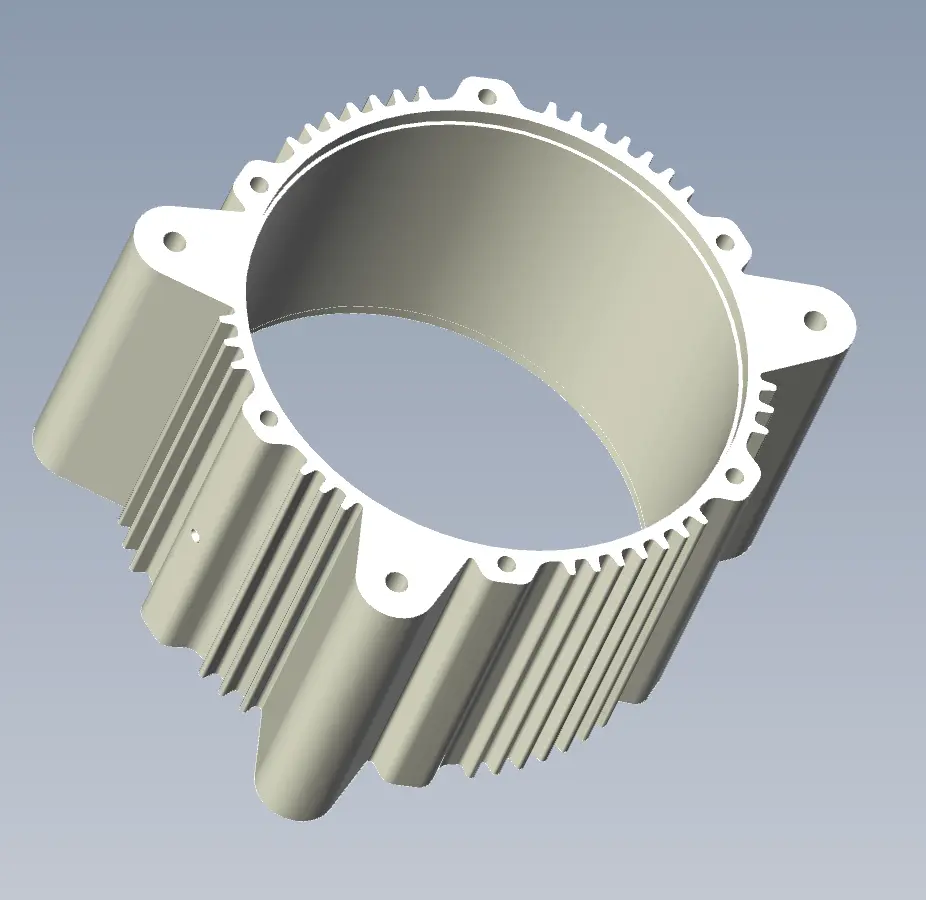
An engineering drawing provides essential information about the gear’s geometry, dimensions, material, and tolerances. For custom gear manufacturing, accurate technical documentation is the foundation of a successful production project.
Important specifications include:
- Gear type: spur, helical, bevel, or worm gear
- Module and number of teeth
- Pitch diameter and outside diameter
- Bore diameter and shaft dimensions
- Face width and tooth geometry
- Material grade and hardness requirements
- Gear accuracy and dimensional tolerances
- Heat treatment and surface treatment requirements
Manufacturing planning should also consider the intended application, expected production quantity, machining processes, and inspection requirements.
For example, a gear used in a heavy-duty industrial gearbox may require different material and hardness specifications from a lightweight gear used in general machinery.
Buyer tip: When requesting a custom gear quotation, provide a 2D engineering drawing or 3D CAD file, preferably in PDF, DWG, STEP, or another commonly supported format. Include the expected order quantity and any applicable technical standards.
2. Material Selection and Gear Blank Preparation
Material selection has a direct influence on gear strength, wear resistance, machinability, and service life.
Different industrial applications require different material properties. The manufacturer should evaluate the working load, rotational speed, operating temperature, lubrication, and environmental conditions before confirming material suitability.
Common materials used in industrial gear manufacturing include:
| Material | Main Properties | Typical Applications |
|---|---|---|
| Carbon Steel | Good strength and machinability | General industrial gears |
| Alloy Steel | High strength and heat-treatment potential | Heavy-duty transmission systems |
| Stainless Steel | Corrosion resistance | Equipment exposed to moisture or corrosive environments |
| Brass | Good machinability and corrosion resistance | Selected light-duty mechanical systems |
| Engineering Plastics | Lightweight and relatively quiet operation | Low-load and specialized applications |
After material selection, the raw material is prepared into a gear blank.
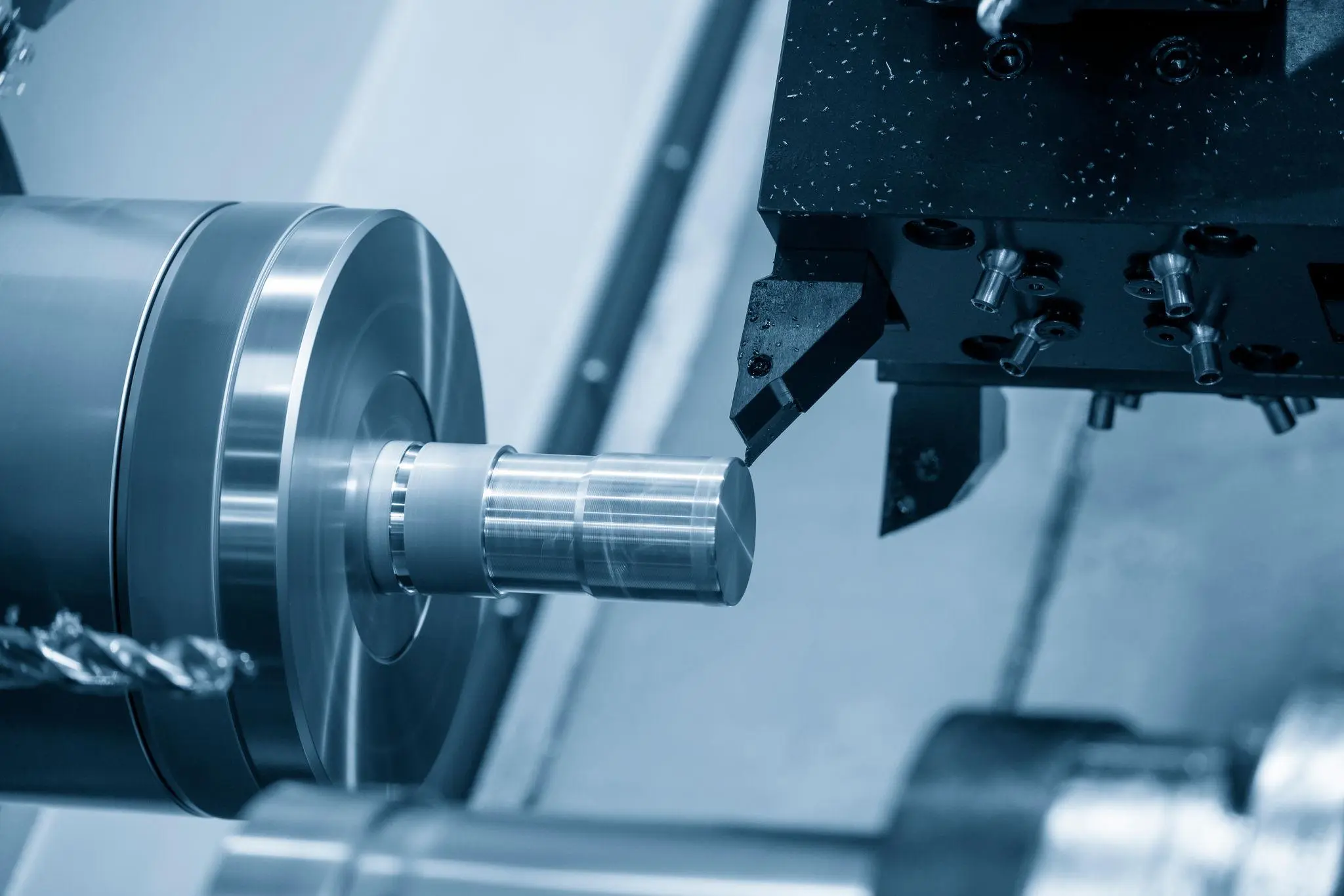
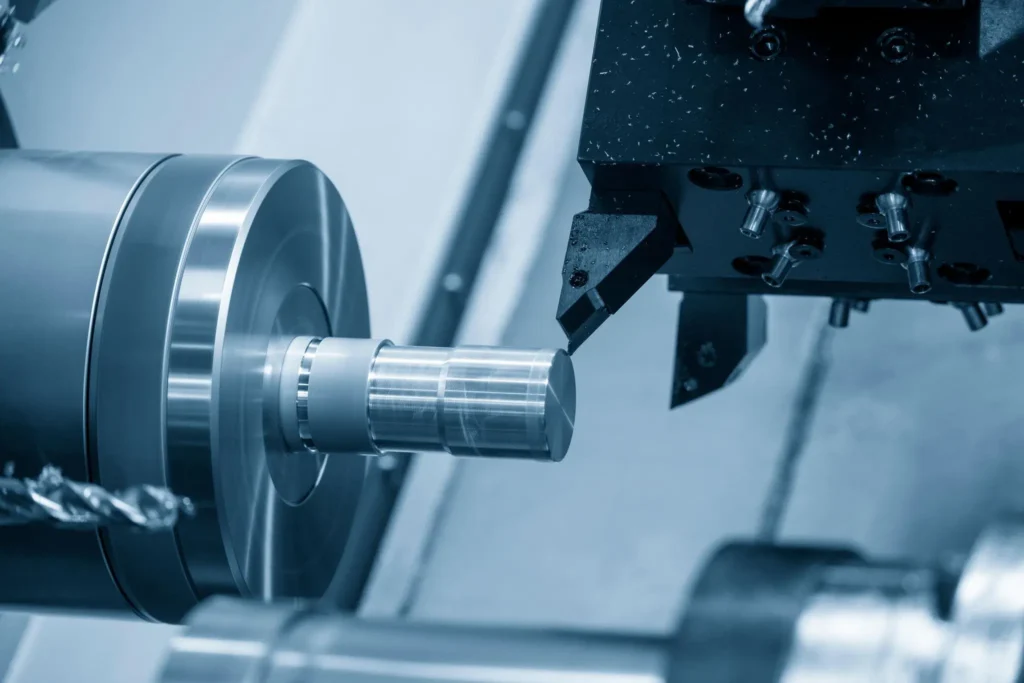
A gear blank is the basic workpiece from which the gear teeth and other required features will be manufactured. Depending on the design, blank preparation may involve cutting, turning, drilling, or other machining operations.
The gear blank must have suitable dimensions and machining allowances to support subsequent manufacturing processes.
3. CNC Gear Cutting: Creating Accurate Gear Teeth
Gear cutting is one of the most important stages in the CNC gear manufacturing process.
The objective is to produce the required tooth geometry according to the engineering drawing. Different gear designs require different cutting methods, and the appropriate process depends on the gear type, material, production quantity, and accuracy requirements.
Common gear cutting methods include:
Gear Hobbing
Gear hobbing is a widely used manufacturing method for producing external cylindrical gears.
It uses a rotating cutting tool called a hob. The hob and workpiece rotate in a coordinated relationship, allowing the cutting tool to progressively generate the gear teeth.
Gear hobbing is commonly used for spur gears and helical gears and is suitable for many industrial gear production applications.
Gear Shaping
Gear shaping uses a reciprocating cutter to generate gear teeth. It is particularly useful for certain internal gears and external gears that may be difficult to produce using conventional hobbing arrangements.
CNC Gear Milling
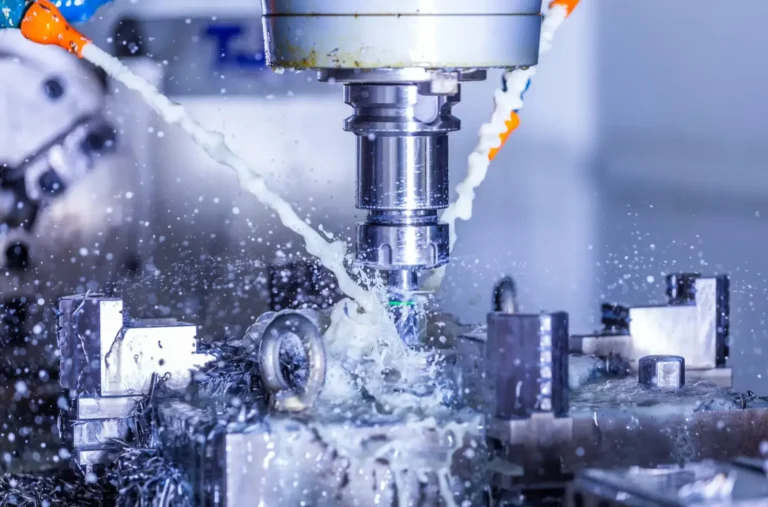
CNC milling uses programmed cutting paths and suitable cutting tools to machine gear profiles or related geometric features.
Depending on the machine configuration, tooling, and gear design, CNC milling can support custom components, prototypes, and specialized gear machining projects.
However, CNC milling is not automatically interchangeable with dedicated gear hobbing or shaping. The appropriate method must be selected according to the required geometry and accuracy.
Comparison of Common Gear Cutting Processes
| Process | Working Principle | Typical Applications |
|---|---|---|
| Gear Hobbing | A rotating hob progressively generates gear teeth | External spur and helical gears |
| Gear Shaping | A reciprocating cutter generates tooth profiles | Internal and external gears |
| CNC Gear Milling | Programmed milling tools machine gear geometry | Custom and specialized gear components |
| Gear Grinding | Abrasive grinding improves finished tooth surfaces | High-accuracy hardened gears |
Choosing the correct gear cutting process helps control manufacturing costs while meeting the required product specifications.
4. Heat Treatment and Surface Treatment
For gears exposed to repeated loads, friction, or demanding operating conditions, heat treatment may be necessary.
Heat treatment changes the mechanical properties of metal through controlled heating and cooling processes. Depending on the material and application, it can improve hardness, strength, wear resistance, and fatigue performance.
Common heat treatment methods include:
- Carburizing: Introduces carbon into the surface layer of suitable steel components.
- Induction Hardening: Uses electromagnetic induction to heat selected areas for surface hardening.
- Quenching and Tempering: Controls hardness and toughness through heating and cooling processes.
- Nitriding: Introduces nitrogen into the surface to improve surface hardness and wear resistance.
Not every gear requires heat treatment. The decision depends on material specifications, gear design, load conditions, and performance requirements.
Surface treatment may also be used to improve corrosion resistance or other functional properties.
For overseas buyers, it is important to clarify whether heat treatment and surface treatment are included in the quotation or arranged as separate manufacturing operations.
5. Gear Finishing and Precision Machining
After initial gear cutting and any required heat treatment, additional finishing operations may be necessary.
Heat treatment can introduce dimensional changes or distortions. Finishing processes help improve tooth geometry, surface quality, and dimensional consistency.
Common gear finishing methods include:
Gear Grinding
Gear grinding uses abrasive tools to remove small amounts of material from tooth surfaces. It is commonly used for hardened gears requiring improved accuracy and surface finish.
Gear Shaving
Gear shaving uses a specialized cutting tool to remove small amounts of material from gear teeth, typically before heat treatment, to improve tooth profile and surface quality.
Gear Honing
Gear honing uses an abrasive or specially designed tool to improve the surface condition and contact characteristics of gear teeth.
The finishing process should be selected according to the gear material, hardness, required accuracy, and intended application.
For buyers, the important question is not simply whether a supplier offers precision machining, but whether its manufacturing process can consistently meet the specifications stated in the engineering drawing.
6. Precision Gear Inspection and Quality Control
Precision inspection is essential for verifying whether manufactured gears meet their engineering requirements.
Even a gear that looks visually correct may have dimensional or tooth geometry deviations that affect its performance.
The inspection process should cover both general dimensions and gear-specific characteristics.
| Inspection Item | What Is Measured | Quality Purpose |
|---|---|---|
| Outside Diameter | Overall external gear diameter | Verifies dimensional requirements |
| Bore Diameter | Internal hole dimensions | Supports correct shaft fitting |
| Tooth Thickness | Thickness of individual gear teeth | Helps control backlash and meshing |
| Pitch Deviation | Tooth spacing accuracy | Evaluates gear geometry |
| Profile Deviation | Tooth profile accuracy | Evaluates involute tooth shape |
| Lead Deviation | Tooth direction and alignment | Evaluates tooth surface geometry |
| Radial Runout | Variation in radial position | Helps assess rotational accuracy |
| Surface Roughness | Surface texture | Evaluates finishing quality |
Depending on the required accuracy, inspection may use calibrated measuring instruments, gear measuring machines, coordinate measuring machines (CMM), and other suitable equipment.
International Gear Accuracy Standards
One important reference for cylindrical involute gears is ISO 1328-1:2013.
This international standard establishes a system for classifying gear flank tolerances. It defines 11 tolerance classes, numbered from 1 to 11, with increasing tolerance values.
In general, a lower class number represents tighter flank tolerances within this classification system.
The standard covers specific geometric ranges, including:
- Number of teeth: 5 to 1,000
- Reference diameter: 5 mm to 15,000 mm
- Normal module: 0.5 mm to 70 mm
- Face width: 4 mm to 1,200 mm
- Helix angle: up to 45°
These figures describe the scope of the standard, not a guaranteed manufacturing capability for every supplier.
It is also important to distinguish manufacturing accuracy from gear performance. ISO 1328-1 classifies flank deviations of individual gears, while ISO 6336 provides calculation methods for evaluating the load capacity of cylindrical spur and helical gears.
Buyers should specify the applicable standard, accuracy requirements, and inspection documentation in their technical agreements.
7. Final Inspection, Packaging, and Delivery
After machining and inspection, finished gears should undergo a final review before shipment.
The final inspection may include:
- Verification of product dimensions
- Confirmation of order quantity
- Visual inspection for burrs, scratches, and surface defects
- Review of required inspection reports
- Verification of material and treatment documentation, when specified
- Confirmation of packaging requirements
Packaging is particularly important for international shipments. Metal gears should be protected against moisture, corrosion, impact, and movement during transportation.
Depending on the product and destination, suitable protective materials, anti-rust packaging, separators, and export cartons may be required.
Before shipment, buyers and manufacturers should confirm the delivery terms, shipping arrangements, packaging specifications, and required export documentation.
CNC Gear Manufacturing Process: A Quick Overview
The following table summarizes the typical production workflow for custom industrial gears.
| Manufacturing Stage | Main Operation | Expected Output |
|---|---|---|
| 1. Drawing Review | Analyze specifications and tolerances | Confirmed manufacturing requirements |
| 2. Material Preparation | Select material and prepare gear blank | Suitable workpiece |
| 3. Gear Cutting | Hobbing, shaping, or CNC milling | Basic gear tooth geometry |
| 4. Heat Treatment | Apply specified thermal process, if required | Required material properties |
| 5. Gear Finishing | Grinding, shaving, or honing, if required | Improved tooth geometry and surface condition |
| 6. Precision Inspection | Measure dimensions and gear deviations | Verified quality records |
| 7. Final Delivery | Final checks and protective packaging | Shipment-ready components |
Not every gear requires all seven stages. The actual manufacturing route depends on the gear design, material, production quantity, and required performance.
Why Choose Changzhou Qiming Precision Machinery for Your Gear Projects?
Selecting a manufacturing partner involves more than identifying a factory with machining equipment. Overseas buyers need a supplier that understands industrial components, technical drawings, and project requirements.
Changzhou Qiming Precision Machinery focuses on industrial mechanical components, including gears, gear reducers, bearings, transmission parts, and custom machinery parts processing.
Our business is oriented toward supporting customers who require industrial components based on specific dimensions, drawings, and technical specifications.
1. Industrial Component Manufacturing Focus
Our product range covers gears and related mechanical transmission components, supporting buyers with different industrial sourcing requirements.
2. Drawing-Based Project Discussions
We welcome technical inquiries based on customer drawings, dimensions, and specifications to help clarify manufacturing requirements before quotation.
3. Related Mechanical Parts Supply
In addition to gears, our product range includes gear reducers, bearings, transmission components, molds, and metal tools.
4. International Sourcing Communication
We understand the importance of clear technical specifications, quotation details, production coordination, and communication with overseas customers.
5. Long-Term Cooperation
We welcome discussions with industrial buyers, equipment manufacturers, and OEM customers looking for a manufacturing partner for ongoing mechanical component projects.
If you are sourcing custom gears or industrial transmission components from China, contact Changzhou Qiming Precision Machinery to discuss your project requirements.
Conclusion
Products – Changzhou Qiming Precision Machinery Co., Ltd
The CNC gear manufacturing process involves much more than cutting metal into a gear shape. It requires careful engineering review, suitable material selection, appropriate gear cutting methods, controlled heat treatment, precision finishing, and reliable quality inspection.
For overseas buyers, understanding these stages makes it easier to evaluate gear manufacturers, identify potential quality risks, and select the right production partner.
Whether you need custom spur gears, helical gears, or other industrial transmission components, providing complete engineering drawings and technical specifications is the best starting point.
Looking for a custom gear manufacturing partner in China? Send your drawings and project requirements to Changzhou Qiming Precision Machinery. Our team welcomes your inquiry and looks forward to discussing your next industrial component project.
Frequently Asked Questions (FAQ)
1. What is the CNC gear manufacturing process?
The CNC gear manufacturing process is a series of operations used to produce gears according to engineering specifications. It may include drawing review, material preparation, gear cutting, heat treatment, finishing, precision inspection, and packaging.
2. What machines are used for CNC gear manufacturing?
Common equipment includes CNC gear hobbing machines, gear shaping machines, CNC milling machines, gear grinding machines, turning machines, and specialized gear inspection equipment. The required machines depend on the gear type and manufacturing specifications.
3. What is the difference between gear hobbing and gear milling?
Gear hobbing uses a rotating hob to progressively generate gear teeth and is widely used for external cylindrical gears. CNC gear milling uses programmed cutting paths and suitable tools to machine gear geometry. Each process has different applications and manufacturing limitations.
4. Why is heat treatment important in gear manufacturing?
Heat treatment can improve hardness, wear resistance, and mechanical properties. It is particularly relevant for gears exposed to high loads and repeated contact. However, the required treatment depends on the material and application.
5. How is gear accuracy measured?
Gear accuracy can be evaluated through measurements of tooth profile, lead, pitch, tooth thickness, and radial runout. Specialized gear measuring equipment and suitable inspection procedures are used according to the required accuracy level.
6. What is ISO 1328-1 in gear manufacturing?
ISO 1328-1:2013 is an international standard that defines a flank tolerance classification system for individual cylindrical involute gears. It establishes 11 tolerance classes, numbered from 1 to 11, with increasing tolerance values.
7. Can I order custom gears from a Chinese manufacturer using my own drawings?
Yes. Many Chinese manufacturers support drawing-based custom gear projects. Buyers should provide engineering drawings, material requirements, dimensions, accuracy specifications, and estimated order quantities for manufacturing evaluation.
8. What information should I provide when requesting a gear manufacturing quotation?
You should provide the gear type, material grade, module, number of teeth, key dimensions, tolerance requirements, heat treatment specifications, engineering drawings, and estimated order quantity. These details help the supplier assess manufacturing feasibility and prepare a more accurate quotation.
9. Does every gear require grinding after gear cutting?
No. Gear grinding is generally used when tighter accuracy or improved tooth surface quality is required. The appropriate finishing method depends on the gear’s material, hardness, design, and application.
10. How can I start a custom gear project with Changzhou Qiming Precision Machinery?
You can contact our team and provide your 2D drawings or 3D CAD files, material requirements, technical specifications, and estimated order quantity. We welcome inquiries about custom gears, gear reducers, bearings, and industrial transmission components.