How to Choose a Custom Transmission Shaft Manufacturer in China: A Buyer’s Guide
A transmission shaft may look like a relatively simple cylindrical component, but its performance can directly affect the reliability of an entire machine.
Transmission shafts transfer torque and rotational motion between motors, gears, couplings, pulleys, sprockets, bearings, and other mechanical components. Depending on the application, a shaft may also need to withstand bending, fatigue, vibration, shock loads, and continuous high-speed operation.
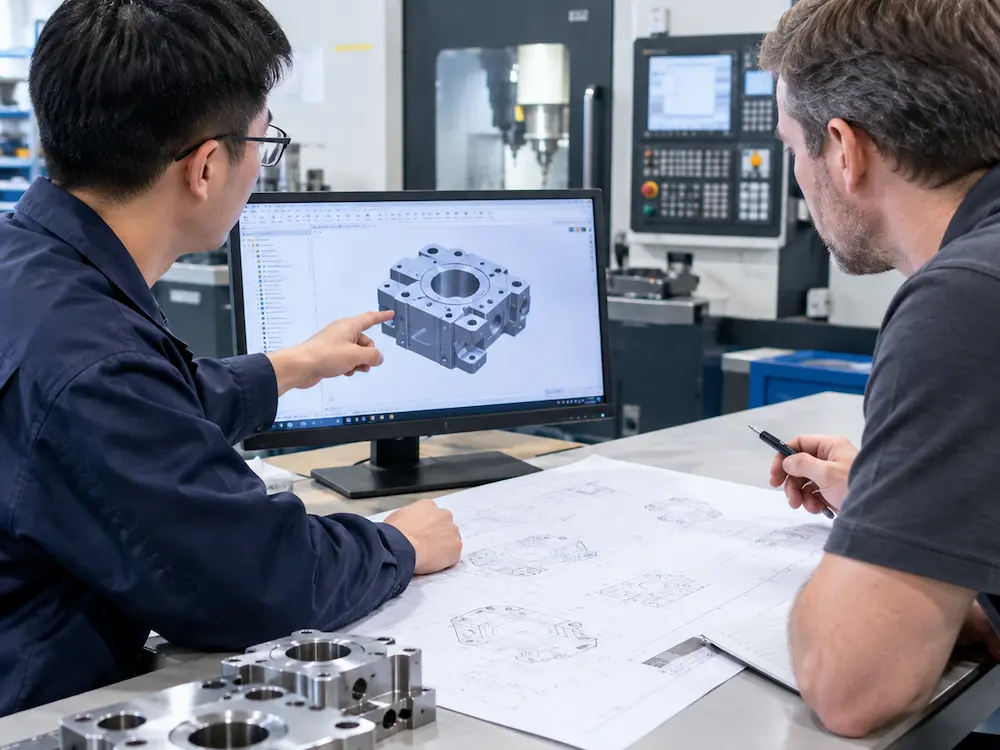
For overseas OEM buyers, choosing the right custom transmission shaft manufacturer is therefore more important than simply finding the lowest quotation.
The right supplier should be able to understand engineering drawings, select suitable manufacturing processes, control critical dimensions, communicate clearly in international projects, and provide consistent parts for repeat production.
This guide explains the key factors buyers should evaluate when sourcing custom transmission shafts from China.
What Does a Custom Transmission Shaft Manufacturer Do?
A custom transmission shaft manufacturer produces shafts according to customer-specific drawings, CAD models, samples, specifications, or application requirements.
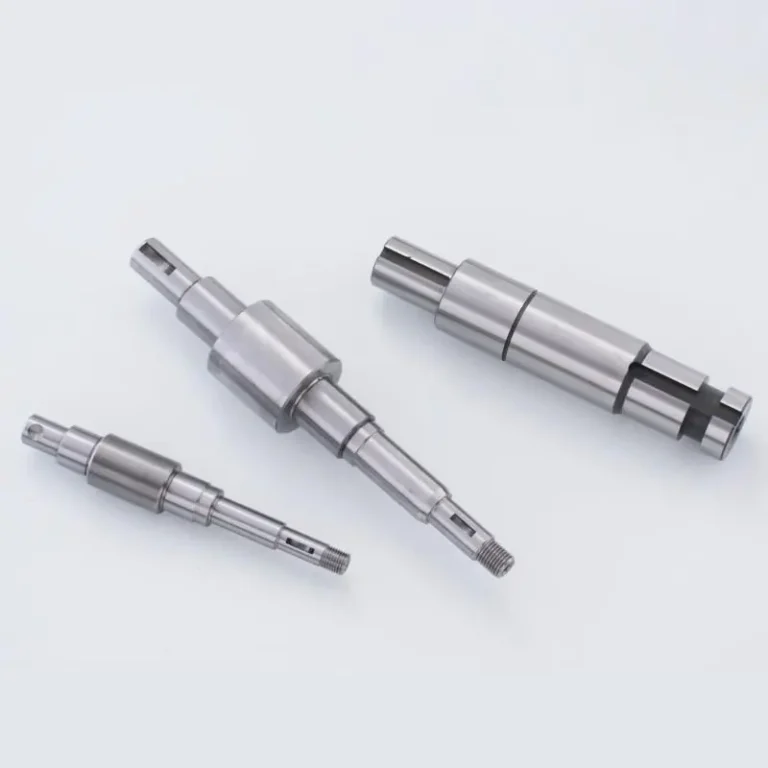
Unlike standard catalog shafts, custom transmission shafts can be manufactured with specific:
- Diameters
- Lengths
- Bearing journals
- Keyways
- Splines
- Threads
- Tapers
- Gear seats
- Shoulders
- Grooves
- Flanges
- Surface finishes
- Heat-treatment requirements
A typical industrial transmission shaft may connect several components within the same mechanical system.
For example:
Electric Motor → Coupling → Transmission Shaft → Gear → Bearing → Driven Equipment
An error in one critical interface can create assembly problems even when the overall shaft looks correct.
That is why overseas buyers should evaluate the supplier’s engineering and quality-control capability, not just machining capacity.
1. Check Whether the Manufacturer Understands Your Application
The first question should not be:
“How much is the shaft?”
It should be:
“Does the manufacturer understand what the shaft is required to do?”
A transmission shaft used in a low-speed conveyor is very different from a high-speed gearbox shaft.
The supplier should understand relevant application factors such as:
| Application Factor | Why It Matters |
|---|---|
| Torque | Determines shaft strength requirements |
| Rotational speed | Influences vibration and balancing |
| Bending load | Affects shaft diameter and geometry |
| Load cycles | Important for fatigue considerations |
| Bearing arrangement | Determines journal dimensions and fits |
| Gear or pulley interface | Determines mounting geometry |
| Operating environment | Influences material and surface requirements |
| Temperature | Can affect material and lubrication |
| Duty cycle | Helps determine long-term performance |
| Installation space | Limits shaft dimensions |
You do not necessarily need to provide every engineering calculation when requesting a quotation. However, giving the manufacturer the application, operating speed, torque, and basic machine information can help them understand the project more accurately.
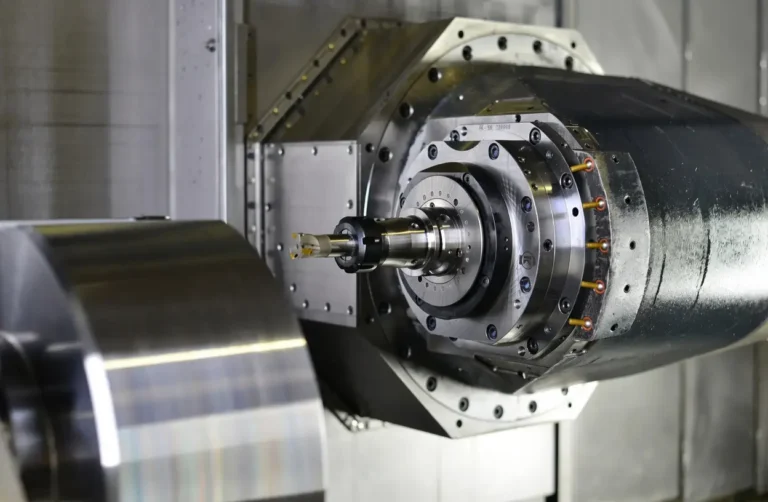
2. Review the Manufacturer’s CNC Machining Capability
Most custom transmission shafts require multiple machining operations.
A typical manufacturing process may include:
Material Preparation → CNC Turning → Milling/Drilling → Keyway/Spline Machining → Heat Treatment → Grinding/Finishing → Inspection
Depending on the design, additional processes may be required.
For example, a stepped transmission shaft may require several precision turning operations, while a splined shaft may require specialized spline machining.
When evaluating a CNC transmission shaft manufacturer, ask:
- Can you manufacture according to 2D drawings?
- Can you work with STEP or other 3D CAD files?
- Can you machine multiple shaft diameters?
- Can you produce keyways?
- Can you manufacture splined shafts?
- Can you machine threads and grooves?
- Can you perform or coordinate heat treatment?
- Can critical surfaces be finished after heat treatment?
The goal is not to find the supplier with the longest equipment list. The goal is to determine whether the supplier’s process matches your actual part requirements.
3. Pay Attention to Shaft Tolerances
A shaft can have the correct nominal diameter and still fail to assemble properly.
For example, if a shaft must fit a bearing, gear, coupling, or other precision component, the tolerance of the mating surfaces becomes critical.
ISO 286-2:2010 provides standardized tolerance classes and limit deviations for holes and shafts. The standard was reviewed and confirmed in 2026, so it remains current.
For buyers, this means that instead of writing:
Shaft diameter: 30 mm
a proper engineering drawing may specify a controlled tolerance or fit.
For example:
Ø30 with specified tolerance/fit
The exact tolerance should come from the machine design rather than being selected simply because it is “more precise.”
Critical shaft features to review
| Feature | What to Check |
|---|---|
| Shaft diameter | Size and tolerance |
| Bearing journal | Fit and surface finish |
| Gear seat | Diameter and runout |
| Keyway | Width, depth, and position |
| Spline | Profile and dimensional requirements |
| Thread | Thread standard and tolerance |
| Shoulder | Diameter and axial position |
| Overall length | Assembly compatibility |
| Concentricity | Relationship between critical surfaces |
| Runout | Rotating accuracy |
This is one reason an experienced precision transmission shaft manufacturer is valuable for OEM projects.
4. Ask How Critical Dimensions Are Inspected
A supplier should not only tell you that a component is “high precision.”
Ask how the precision is verified.
For a custom transmission shaft, inspection may include:
- Dimensional measurement
- Diameter measurement
- Length measurement
- Thread inspection
- Keyway inspection
- Runout measurement
- Concentricity verification
- Surface roughness measurement
- Hardness testing where required
- Material verification where specified
For an overseas buyer, inspection documentation can also be important.
Depending on the project, you may request:
- Inspection reports
- Material certificates
- Heat-treatment records
- First Article Inspection documentation
- Dimensional inspection data
The exact inspection plan should match the drawing and purchase specification.
5. Consider Material and Heat Treatment
Material selection should be based on the shaft’s mechanical requirements rather than simply choosing the cheapest steel.
Depending on the application, buyers may consider factors such as:
- Tensile strength
- Yield strength
- Toughness
- Fatigue resistance
- Wear resistance
- Machinability
- Heat-treatment response
- Corrosion environment
Heat treatment may also be required to achieve specific mechanical or surface properties.
Possible processes include:
- Quenching and tempering
- Induction hardening
- Carburizing
- Nitriding
- Other application-specific treatments
However, buyers should avoid specifying heat treatment simply because it sounds more advanced.
The correct process should be determined by the material, load, wear conditions, geometry, and application requirements.
6. Check Requirements for High-Speed Shafts
If your transmission shaft operates at high rotational speed, dynamic behavior becomes increasingly important.
An unbalanced rotating shaft can generate vibration, noise, bearing loads, and other operating problems.
ISO 21940-11:2016 establishes procedures and unbalance tolerances for rotors with rigid behaviour and remains a current ISO standard.
This does not mean every transmission shaft automatically requires balancing to a particular grade.
Instead, the balancing requirement should be defined according to:
- Operating speed
- Rotor design
- Shaft assembly
- Machine dynamics
- Customer specifications
- Applicable standards
When sourcing a high-speed transmission shaft, ask the supplier whether balancing is required and how the requirement will be verified.
7. Evaluate the Manufacturer’s Ability to Handle Custom Drawings
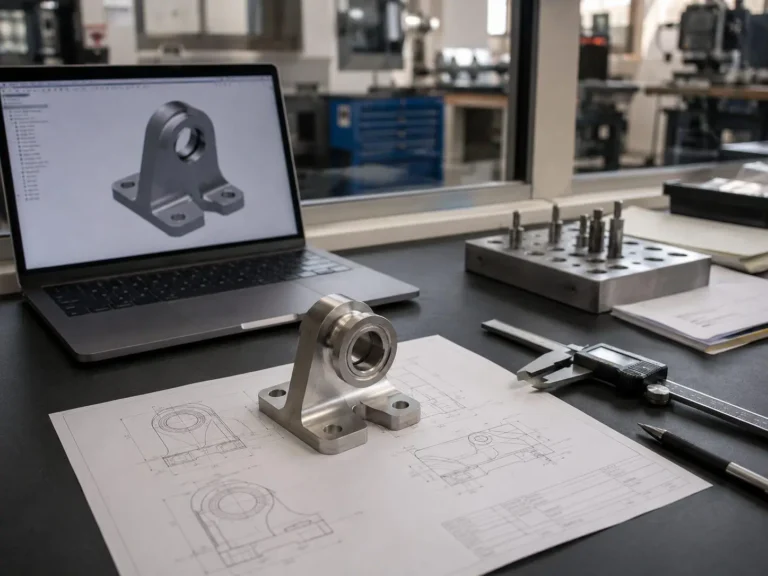
A strong custom transmission shaft supplier should be comfortable working from engineering documentation.
Your RFQ should ideally include:
- 2D drawing
- 3D CAD model
- Material specification
- Quantity
- Annual demand, if known
- Dimensional tolerances
- Surface finish
- Heat treatment
- Keyway/spline requirements
- Inspection requirements
- Packaging requirements
- Delivery requirements
What if you do not have a complete drawing?
This is common with replacement parts or older machinery.
You may initially provide:
- Existing shaft sample
- Photos
- Measurements
- Old drawings
- Product name
- Machine model
- Application information
A manufacturer can then identify what additional information is required before quotation or production.
For OEM development, however, a properly dimensioned drawing remains the best reference for repeat production.
8. Compare Suppliers by Total Cost, Not Unit Price
A $5 lower unit price does not necessarily mean a lower procurement cost.
For industrial components, buyers should consider:
Total Cost = Part Price + Tooling + Inspection + Packaging + Shipping + Rework Risk + Quality Risk
For example, a supplier offering a lower quotation may become more expensive if:
- Tolerances are inconsistent
- Parts require rework
- Delivery is repeatedly delayed
- Packaging causes damage
- Communication is poor
- Replacement parts are difficult to obtain
A reliable transmission shaft supplier in China should provide a quotation that is clear about specifications, quantity, lead time, packaging, and other commercial conditions.
9. Evaluate Communication Before Placing a Large Order
This factor is often underestimated by overseas buyers.
Before placing a production order, observe how the supplier handles your RFQ.
Does the supplier:
- Read the drawing carefully?
- Ask about unclear dimensions?
- Identify missing information?
- Confirm material?
- Confirm quantity?
- Discuss tolerances?
- Explain lead time?
- Provide a structured quotation?
A supplier that asks relevant technical questions before production may actually be reducing your procurement risk.
By contrast, a supplier that immediately quotes without reviewing the drawing may appear convenient but can create problems later.
10. Check Whether the Manufacturer Can Support Repeat OEM Production
A prototype supplier and a long-term OEM supplier are not necessarily the same thing.
If you are developing a new machine, you may initially need:
Prototype → Sample Approval → Pilot Batch → Mass Production → Repeat Orders
Your supplier should ideally be able to support this transition.
For long-term procurement, evaluate:
| Requirement | Why It Matters |
|---|---|
| Stable specifications | Ensures repeatability |
| Process consistency | Reduces variation |
| Inspection records | Supports quality tracking |
| Drawing revision control | Prevents outdated production |
| Communication | Reduces misunderstandings |
| Production flexibility | Supports changing demand |
| Packaging consistency | Protects parts in transit |
| After-sales support | Helps resolve technical issues |
This is especially important for machinery manufacturers that expect the same transmission shaft to be supplied repeatedly over several years.
Why Choose Changzhou Qiming Precision Machinery Co., Ltd.?
For overseas buyers looking for a custom transmission shaft manufacturer, Changzhou Qiming Precision Machinery Co., Ltd. focuses on customized mechanical components for industrial applications.
Our product scope includes:
- Transmission shafts
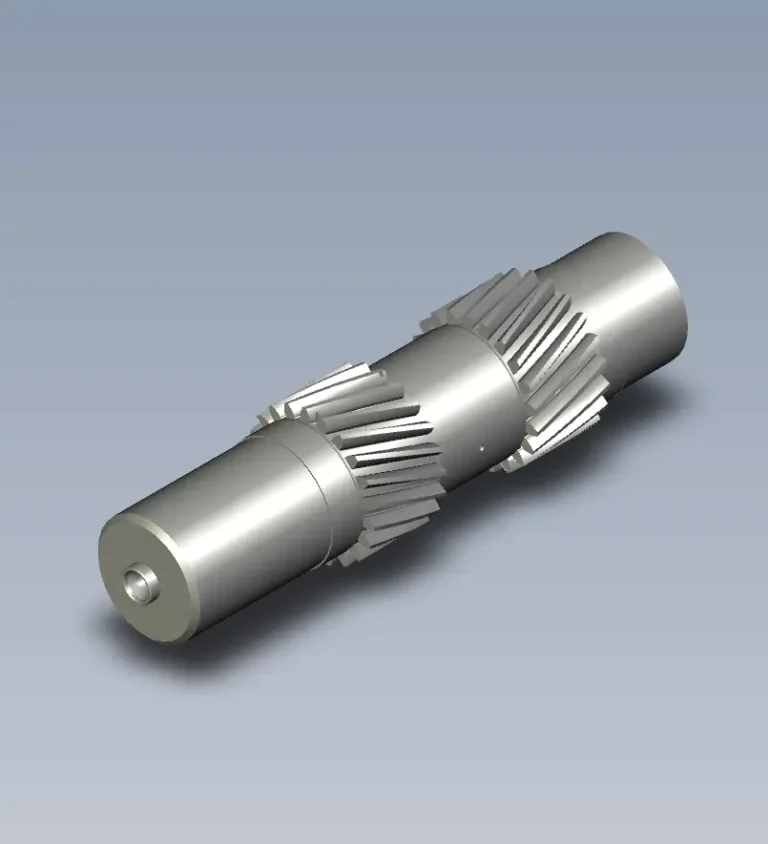
- Gear shafts
- Custom gears
- Machinery components
- CNC-machined parts
- Other customized mechanical components
What makes Qiming suitable for OEM buyers?
Drawing-based manufacturing
We can work from customer drawings, CAD files, samples, and technical specifications rather than limiting buyers to standard products.
Gear and shaft integration
For projects involving both gears and shafts, working with one manufacturing partner can simplify technical communication and sourcing.
Customized machining
Different shaft configurations can be developed according to the customer’s dimensions, interfaces, tolerances, and application requirements.
OEM-oriented cooperation
Our focus is on supporting B2B machinery manufacturers, distributors, and buyers that require customized components rather than generic catalog products.
International buyer communication
Clear communication is essential for overseas projects. Technical requirements, quantities, inspection needs, and delivery expectations can be confirmed before production.
Long-term supply potential
For OEM customers, the goal is not simply to manufacture one shaft. The objective is to establish a repeatable supply relationship that supports future orders and product development.
A Practical Checklist for Choosing a Transmission Shaft Manufacturer in China
Before selecting your supplier, use this checklist:
| Evaluation Item | Questions to Ask |
|---|---|
| Engineering | Can you understand and manufacture from our drawings? |
| Materials | Can you source the specified material? |
| Machining | Does your process match the shaft geometry? |
| Tolerances | How are critical dimensions controlled? |
| Inspection | What inspection records can you provide? |
| Heat treatment | Can required treatment be supported? |
| Balancing | Can you meet balancing requirements when applicable? |
| Prototyping | Can you produce samples before mass production? |
| Production | Can you support repeat orders? |
| Communication | Can technical issues be resolved quickly? |
| Packaging | How will shafts be protected during international shipping? |
| Commercial | Is the quotation clear about quantity, lead time, and terms? |
A supplier that performs well across these areas is generally more valuable than one that simply offers the lowest initial price.
FAQ About Custom Transmission Shaft Manufacturers in China
What should I look for in a custom transmission shaft manufacturer?
Look for a supplier with suitable machining capability, drawing interpretation skills, material and heat-treatment support, inspection capability, clear communication, and the ability to support repeat OEM production.
Can Chinese manufacturers produce custom transmission shafts from drawings?
Yes. Custom transmission shafts can be manufactured according to 2D drawings, 3D CAD files, samples, and technical specifications. A complete drawing is the preferred reference for production.
What information should I provide for a transmission shaft quotation?
Provide the drawing, material, quantity, critical tolerances, surface finish, heat-treatment requirements, application information, and delivery requirements. A 3D CAD file can also help the supplier understand complex geometry.
What materials are commonly used for transmission shafts?
Steel is widely used for industrial transmission shafts because of its combination of strength, toughness, machinability, and suitability for different heat-treatment processes. The correct grade should be selected according to the actual application.
Do transmission shafts require heat treatment?
Not every shaft requires heat treatment. The requirement depends on material, torque, fatigue loading, wear, operating conditions, and the design specification.
Do high-speed transmission shafts require balancing?
Some high-speed rotating shafts require balancing, but the requirement depends on operating speed, rotor design, machine dynamics, and the customer’s specification. ISO 21940-11 provides procedures and tolerances for balancing rotors with rigid behaviour.
How can I compare two transmission shaft suppliers?
Compare technical capability, inspection methods, material control, communication, lead time, quality consistency, packaging, and total landed cost—not only the unit price.
Conclusion: Choose a Manufacturing Partner, Not Just a Shaft Supplier
Choosing a custom transmission shaft manufacturer in China should be treated as a technical sourcing decision rather than a simple price comparison.
The right manufacturer should be able to understand your application, interpret engineering drawings, select suitable manufacturing processes, control critical dimensions, coordinate heat treatment when required, inspect finished components, and support repeat OEM production.
For overseas machinery manufacturers and distributors, these capabilities can reduce quality risks and make long-term procurement much easier.
Changzhou Qiming Precision Machinery Co., Ltd. supports customized transmission shafts, gear shafts, gears, and other machinery components according to customer drawings, samples, and technical requirements.
If you are developing a new machine, replacing an existing shaft, or looking for a long-term OEM supplier in China, send us your 2D drawing, 3D CAD file, sample information, or project requirements.
We can review the technical requirements and provide a customized quotation for your transmission shaft project.