Gear Shaft vs Separate Gear and Shaft: Which Design Is Better for Power Transmission?
Introduction
When designing a gearbox or industrial transmission system, engineers must decide how the gear should connect to the shaft.
There are two common approaches:
- Gear shaft (integrated gear shaft): the gear and shaft are manufactured as one component.
- Separate gear and shaft: the gear and shaft are manufactured independently and then connected using a key, spline, interference fit, or another suitable connection method.
So, gear shaft vs separate gear and shaft—which design is better?
There is no universal answer. An integrated gear shaft can reduce the number of interfaces and eliminate certain connection-related concerns, while a separate gear and shaft can provide greater flexibility for replacement, manufacturing, and assembly.
The best design depends on torque, gear size, shaft geometry, manufacturing volume, maintenance requirements, available space, and total cost.
This guide compares both designs from an engineering and purchasing perspective to help OEM buyers choose the right solution for industrial gearboxes and mechanical transmission systems.
Gear Shaft vs Separate Gear and Shaft: Quick Comparison
| Design Factor | Integrated Gear Shaft | Separate Gear + Shaft |
|---|---|---|
| Construction | Gear and shaft are one component | Gear and shaft are separate components |
| Connection interface | No separate gear-to-shaft interface | Requires key, spline, interference fit, etc. |
| Assembly | Simpler | More assembly steps |
| Alignment | Controlled during manufacturing | Depends on shaft/gear assembly accuracy |
| Replacement | Entire component may need replacement | Gear or shaft can potentially be replaced separately |
| Manufacturing flexibility | Lower for some designs | Higher |
| Compactness | Excellent for suitable applications | Depends on connection design |
| Typical application | High-load gear shafts, compact transmissions | Modular gearboxes and replaceable components |
| Best advantage | Integrated structure | Flexibility and serviceability |
Neither design is inherently superior. The correct choice should be based on the complete transmission system rather than the component alone.
1. What Is an Integrated Gear Shaft?
An integrated gear shaft, also called a gear shaft or shaft gear, combines the gear teeth and shaft into one continuous component.
Instead of manufacturing a gear and shaft separately, the gear geometry is machined directly on the shaft body.
This configuration is commonly considered for applications where:
- The gear is permanently associated with the shaft.
- High structural rigidity is important.
- The available installation space is limited.
- The gear and shaft have a close functional relationship.
- Eliminating a separate gear-to-shaft connection is desirable.
Because there is no separate keyway, spline, or interference-fit interface between the gear and shaft, the design can eliminate certain assembly-related variables.
However, this does not mean an integrated gear shaft automatically has higher strength. The shaft diameter, tooth geometry, root fillet, material, heat treatment, and manufacturing accuracy still determine the actual performance.
2. What Is a Separate Gear and Shaft?
With a separate design, the gear and shaft are manufactured independently and then assembled.
The connection may use:
- Parallel keys
- Splines
- Interference or shrink fits
- Tapered connections
- Other application-specific mechanical interfaces
This approach provides greater modularity.
For example, if the gear becomes worn while the shaft remains usable, a separate gear may potentially be replaced without replacing the entire shaft.
This can be particularly attractive for equipment where maintenance, spare parts, and component interchangeability are important.
However, the connection itself becomes an important engineering consideration.
The designer must evaluate:
- Torque capacity
- Stress concentration
- Fit tolerance
- Runout
- Concentricity
- Assembly method
- Axial retention
- Fatigue behavior
A well-designed separate gear and shaft can perform extremely well, but the connection must be treated as part of the transmission system.
3. Which Design Is Stronger?
This is one of the most common questions when comparing a gear shaft vs separate gear and shaft.
The answer depends on the geometry and loading conditions.
An integrated gear shaft eliminates the mechanical interface between the gear and shaft. This can simplify the load path and avoid some connection-related stress concentrations.
However, the gear teeth, shaft body, and transition between them must still withstand bending and torsional loads.
A separate gear and shaft introduces an additional interface. If a keyway is used, for example, the shaft cross-section is locally reduced and stress concentration must be considered.
If an interference fit is used, the hub and shaft must be designed to provide the required contact pressure without causing excessive stresses.
A 2025 engineering study on interference-fit gear applications investigated stress concentrations around the gear hub and shaft interface. Its finite-element analysis showed that modifying hub geometry could substantially reduce calculated stresses in the studied configurations. This demonstrates why the connection geometry matters when using separate gears and shafts.
Engineering conclusion: an integrated gear shaft is not automatically stronger, and a separate gear and shaft is not automatically weaker. The complete geometry and load path determine the result.
4. Gear Accuracy Matters in Both Designs
Whether the gear is integrated with the shaft or manufactured separately, gear accuracy remains critical.
For cylindrical involute gears, ISO 1328-1:2013 provides a standardized flank tolerance classification system for gear manufacturers and buyers.
The standard defines 11 flank tolerance classes, numbered 1 to 11 in order of increasing tolerance. Its specified application range includes gears with:
- 5 to 1,000 teeth
- Reference diameters from 5 mm to 15,000 mm
- Normal modules from 0.5 mm to 70 mm
- Face widths from 4 mm to 1,200 mm
- Helix angles up to 45°
These ranges show how broadly standardized gear accuracy can be specified for industrial applications.
For buyers, the important point is that gear accuracy should be specified according to the actual application rather than simply asking for a “high-precision gear.”
ISO/TR 10064-1:2019 also provides guidance for measuring cylindrical gear tooth flanks, including pitch, profile, helix, and tangential composite characteristics.
5. When Should You Choose an Integrated Gear Shaft?

An integrated gear shaft is worth considering when the following requirements apply:
Compact transmission design
Combining the gear and shaft can reduce the number of components and eliminate the physical space required for a separate hub and connection.
Permanent gear-to-shaft relationship
If the gear is not expected to be replaced independently, an integrated design can simplify the overall structure.
High structural rigidity
A continuous component can avoid some compliance associated with a separate connection, although actual stiffness still depends on shaft geometry and support conditions.
Reduced assembly complexity
There is no separate gear-to-shaft assembly operation, which can reduce one source of assembly variation.
Custom OEM transmission
For a gearbox designed specifically around one gear and shaft configuration, an integrated gear shaft may provide a practical solution.
6. When Is a Separate Gear and Shaft Better?
A separate gear and shaft may be preferable when modularity and maintenance are more important.
Consider a separate design when:
- The gear may need to be replaced independently.
- Different gear ratios may use the same shaft platform.
- The shaft and gear require different materials or heat treatments.
- Manufacturing processes are more economical when the components are produced separately.
- The equipment requires modular assembly.
- Spare-part replacement is important.
- The gear and shaft have substantially different manufacturing requirements.
For example, a gearbox manufacturer may want to standardize several shaft diameters while changing gear ratios between product models. A separate gear and shaft can provide greater design flexibility.
7. Manufacturing Cost: Which Design Is Cheaper?
It is tempting to assume that one-piece gear shafts are always cheaper because they require fewer components.
That is not necessarily true.
An integrated gear shaft may require a larger raw-material blank and more complex machining. Material utilization can also become an important cost factor.
A separate gear and shaft may require additional assembly operations, but each component can sometimes be manufactured using a more efficient process.
| Cost Factor | Integrated Gear Shaft | Separate Gear + Shaft |
|---|---|---|
| Number of components | Lower | Higher |
| Assembly cost | Lower | Higher |
| Raw material flexibility | Lower | Higher |
| Machining flexibility | Moderate | Higher |
| Replacement cost | Potentially higher | Potentially lower |
| Tooling requirements | Application-dependent | Application-dependent |
| Total cost | Depends on design and quantity | Depends on design and quantity |
For OEM buyers, total manufacturing cost is more meaningful than the unit price of the gear or shaft alone.
Tooling, material utilization, machining time, heat treatment, inspection, assembly, inventory, and future replacement costs should all be considered.
8. Gear Shaft vs Separate Gear and Shaft: Which Is Better for Maintenance?
Maintenance is another major difference.
With an integrated gear shaft, damage to either the gear or shaft may require replacement of the entire component.
With a separate gear and shaft, individual components may be replaceable depending on the design.
However, separate components also create additional interfaces that must remain correctly aligned throughout the service life.
Therefore:
Integrated gear shaft = simpler structure and fewer interfaces.
Separate gear + shaft = greater modularity and potential serviceability.
For equipment with difficult maintenance access, the replacement strategy should be considered during the initial design stage.
9. How Should Overseas Buyers Choose?
For international OEM buyers, the decision can be simplified by asking six questions:
- Does the gear need to be replaced independently?
- Is the available installation space limited?
- What torque and bending loads must the shaft transmit?
- Does the gear require a different material or heat treatment from the shaft?
- What production quantity is expected?
- Which design provides the better total cost over the product’s service life?
The following decision guide can help:
| Buyer Requirement | Recommended Starting Point |
|---|---|
| Compact one-piece transmission | Integrated gear shaft |
| Minimum number of components | Integrated gear shaft |
| Independent gear replacement | Separate gear + shaft |
| Modular gearbox design | Separate gear + shaft |
| Different gear/shaft materials | Separate gear + shaft |
| Permanent OEM assembly | Integrated gear shaft may be suitable |
| Easy component replacement | Separate gear + shaft |
| Highly customized transmission | Evaluate both |
The final decision should always be confirmed through engineering calculations and manufacturability review.
10. What Should You Provide to a Gear Shaft Manufacturer?
For overseas buyers requesting a quotation for a custom gear shaft, complete technical information can significantly improve quotation accuracy.
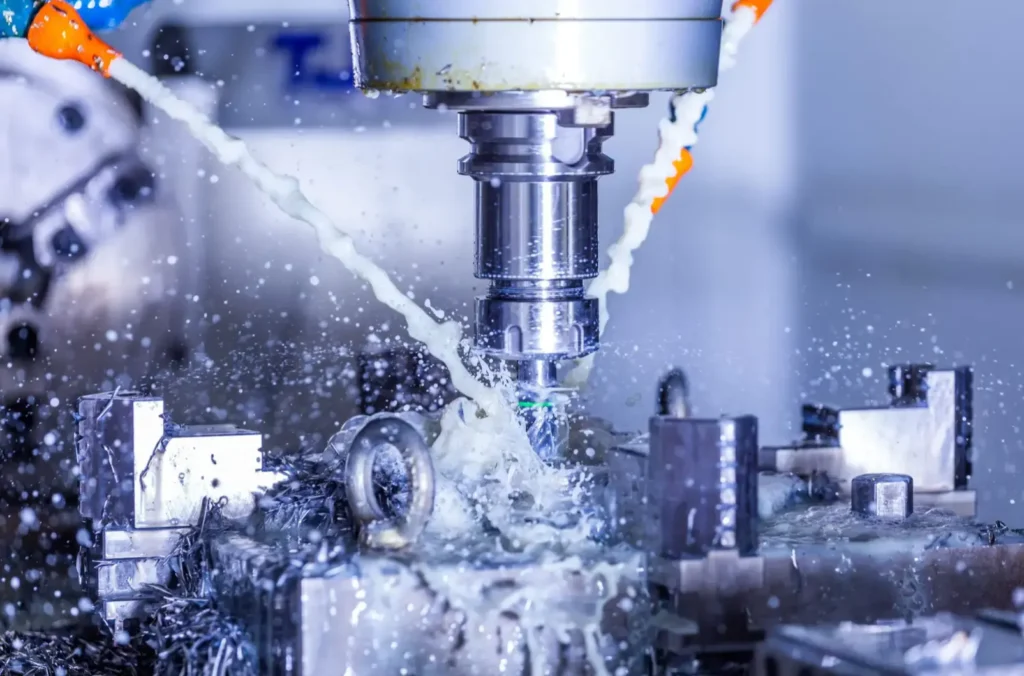
Ideally provide:
- 2D engineering drawing
- 3D CAD model
- Gear type
- Number of teeth
- Module or diametral pitch
- Pressure angle
- Gear face width
- Shaft diameter
- Overall shaft length
- Material specification
- Heat-treatment requirements
- Gear accuracy requirements
- Critical dimensional tolerances
- Surface treatment requirements
- Quantity
- Application and operating conditions
For separate gears and shafts, also specify the connection method, such as keyway, spline, or interference fit.
ISO 1328-1 specifically provides a common tolerance reference for gear manufacturers and buyers, making standardized technical requirements much clearer than vague descriptions such as “precision gear.”
Why Choose Qiming Precision Machinery?
Qiming Precision Machinery focuses on custom mechanical components for industrial applications, including gears, transmission shafts, and related machining parts.
For overseas OEM buyers, several practical advantages are important:
Drawing-Based OEM Manufacturing
Customers can provide 2D drawings, 3D models, or product samples for technical evaluation. This is particularly useful when the gear shaft has application-specific dimensions or non-standard geometry.
Gear and Shaft Capability
Instead of discussing the gear and shaft as completely separate sourcing projects, buyers can communicate their requirements for related transmission components through one supplier.
Custom Mechanical Components
Qiming can discuss requirements involving custom gears, transmission shafts, and other machinery components according to the buyer’s drawings and specifications.
Prototype and Repeat Production
For OEM projects, the goal is not simply to manufacture one component. Clear technical requirements and repeatable manufacturing specifications are important for long-term supply.
For overseas machinery manufacturers, gearbox companies, distributors, and industrial equipment builders, this drawing-based approach can make communication easier and reduce unnecessary quotation cycles.
Frequently Asked Questions
1. What is the difference between a gear shaft and a separate gear and shaft?
A gear shaft combines the gear and shaft into one component. A separate design manufactures the gear and shaft independently and connects them using a key, spline, interference fit, or another suitable method.
2. Is an integrated gear shaft stronger?
Not necessarily. It eliminates a separate gear-to-shaft interface, but the actual strength depends on material, geometry, tooth design, shaft diameter, stress concentration, heat treatment, and loading conditions.
3. Is a separate gear and shaft easier to maintain?
Often, yes. Depending on the design, the gear can potentially be replaced without replacing the entire shaft. However, the connection must be properly designed and maintained.
4. Is a gear shaft cheaper than a separate gear and shaft?
There is no universal answer. Cost depends on raw material, machining processes, production quantity, tooling, heat treatment, inspection, assembly, and replacement requirements.
5. Which design is better for a gearbox?
Both can be suitable. Integrated gear shafts are attractive for compact and permanently integrated transmission designs, while separate gears and shafts can be advantageous for modular gearboxes and applications requiring component replacement.
6. What gear accuracy standard should buyers reference?
For cylindrical involute gears, ISO 1328-1:2013 provides a standardized flank tolerance classification system. It defines 11 tolerance classes and provides a common reference for manufacturers and buyers.
7. Can Qiming manufacture custom gear shafts?
Yes. Qiming Precision Machinery can discuss custom gear shaft and transmission component requirements based on customer drawings, 3D models, samples, material specifications, and production requirements.
Conclusion
So, gear shaft vs separate gear and shaft—which design is better?
The answer depends on the application.
An integrated gear shaft can be an excellent solution when compactness, structural integration, and reduced assembly complexity are important.
A separate gear and shaft can be more attractive when modularity, independent replacement, manufacturing flexibility, or different material requirements are important.
The best design is not necessarily the one with fewer components or the lowest initial price. It is the design that provides the required torque capacity, gear accuracy, durability, manufacturability, maintenance strategy, and total cost.
For overseas OEM buyers, the most reliable starting point is a complete engineering drawing or 3D model containing the required gear geometry, shaft dimensions, material, tolerances, heat treatment, and quantity.
Looking for a custom gear shaft or transmission shaft manufacturer in China?
Send Qiming Precision Machinery your drawing or 3D model to discuss the appropriate manufacturing solution for your application.