How Much Does a Custom Gear Cost? 8 Factors That Affect Gear Manufacturing Price
“How much does a custom gear cost?”
It is one of the first questions many OEM buyers ask when sourcing gears from China. However, there is no single price for a custom industrial gear.
A small prototype gear and a large hardened transmission gear can have completely different manufacturing costs, even if both are described simply as “custom gears.”
The final gear manufacturing price depends on factors such as material, gear size, module, number of teeth, accuracy, heat treatment, machining process, quantity, and inspection requirements.
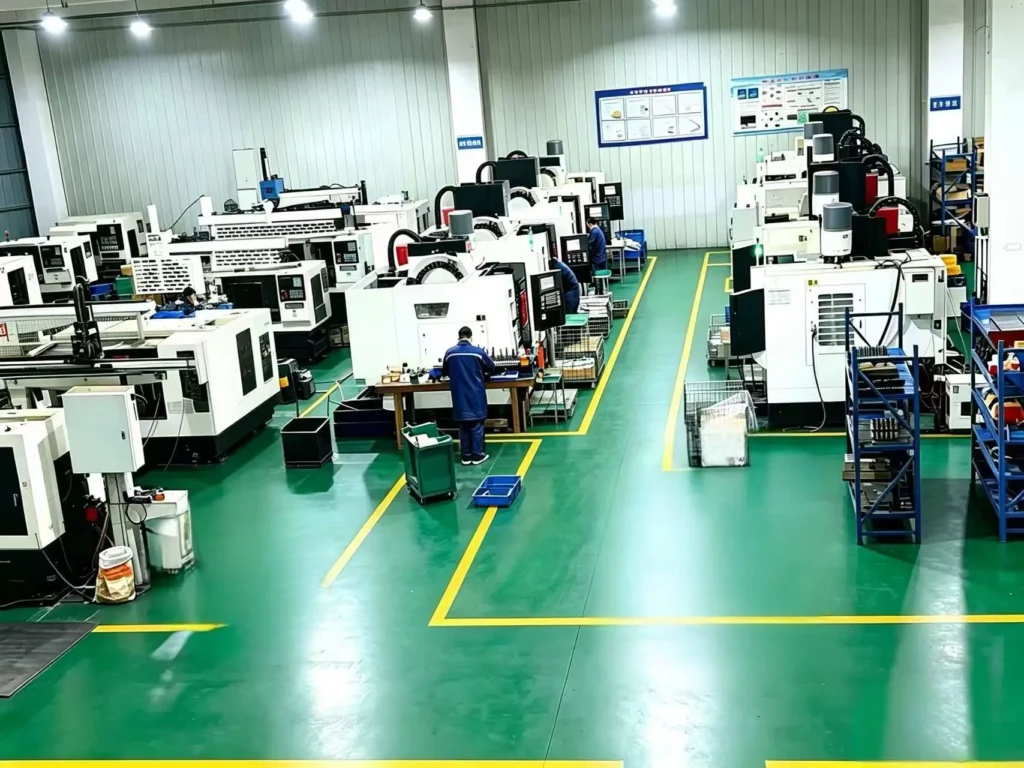
This guide explains the 8 key factors that affect custom gear cost, helping overseas buyers understand quotations and make better sourcing decisions.
How Much Does a Custom Gear Cost?
There is no reliable universal price range for custom gears because the specifications can vary dramatically.
About Us – Changzhou Qiming Precision Machinery Co., Ltd
For example, a simple low-volume spur gear may require only basic machining and gear cutting, while a high-precision hardened gear may require additional heat treatment, grinding, specialized inspection, and tighter process control.
Instead of asking only:
“What is the price per gear?”
A better question is:
“What manufacturing requirements are included in the quoted gear price?”
For OEM buyers, understanding the cost structure is often more useful than comparing two unit prices without understanding what is included.
1. Material Is One of the First Factors Affecting Gear Cost
The material selected for a gear directly affects both raw material cost and manufacturing requirements.
Common gear materials include:
- Carbon steel
- Alloy steel
- Stainless steel
- Cast iron
- Brass
- Bronze
- Engineering plastics
For industrial transmission gears, alloy steels are often considered when strength, fatigue resistance, and heat-treatment capability are important.
The material also affects machining behavior. Harder or more difficult-to-machine materials may require different cutting parameters, tooling, or additional finishing operations.
Example
A simple carbon-steel gear and a heat-treatable alloy-steel gear with otherwise similar dimensions should not automatically be expected to have the same manufacturing price.
Therefore, when requesting a custom gear quotation, always specify the exact material grade whenever possible.
2. Gear Size, Module, and Number of Teeth
Gear geometry has a major influence on manufacturing cost.
Important parameters include:
- Gear outside diameter
- Root diameter
- Face width
- Module
- Diametral pitch
- Number of teeth
- Pressure angle
- Helix angle
- Bore diameter
The module is particularly important because it describes the relationship between the pitch diameter and number of teeth in metric gear systems.
For example:
Module = Pitch Diameter ÷ Number of Teeth
A larger gear does not necessarily mean a proportionally higher price, but larger dimensions can require more material, larger machines, longer machining cycles, and different handling requirements.
For reference, ISO 1328-1:2013 covers cylindrical involute gears with normal modules from 0.5 mm to 70 mm, reference diameters from 5 mm to 15,000 mm, and face widths up to 1,200 mm within its stated scope.
This illustrates how wide the engineering range of industrial gears can be.
3. Gear Accuracy and Tolerance Requirements
Precision is one of the most important factors affecting gear manufacturing cost.
A gear designed for general machinery does not necessarily require the same accuracy as a gear used in a precision transmission system.
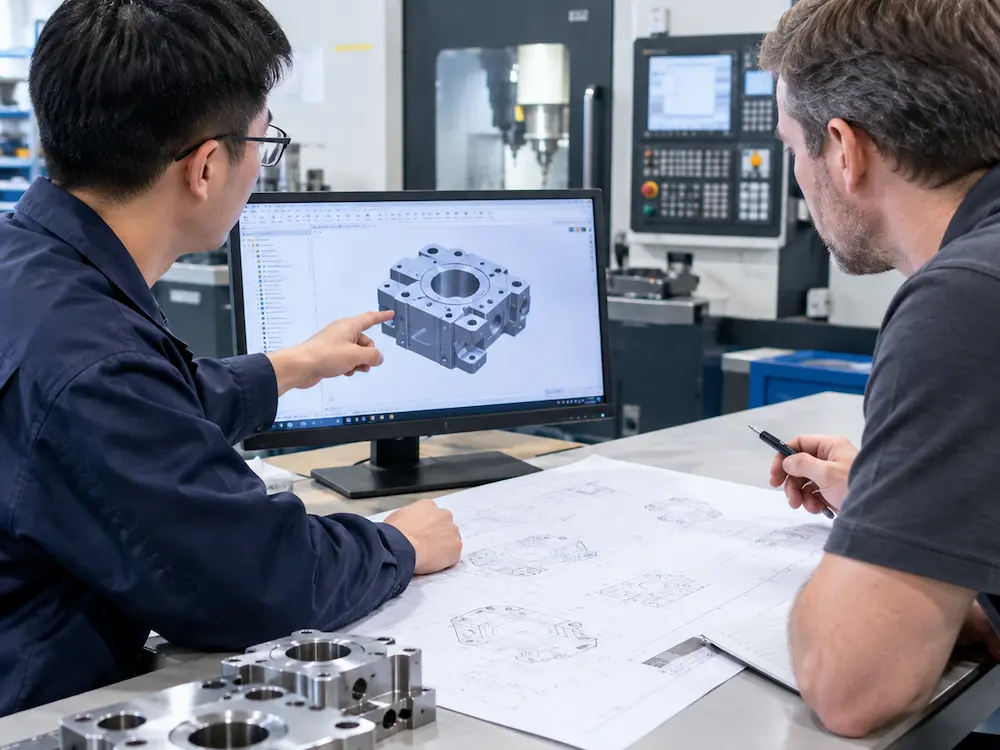
Potential requirements include:
- Pitch accuracy
- Profile accuracy
- Lead or helix accuracy
- Runout
- Tooth thickness
- Backlash
- Bore tolerance
- Concentricity
- Surface roughness
ISO 1328-1:2013 establishes 11 flank tolerance classes, numbered from 1 to 11 in order of increasing tolerance. The standard provides a common reference for manufacturers and buyers when defining and assessing cylindrical involute gear flank tolerances.
This is important when comparing quotations.
A supplier quoting a lower price may not necessarily be offering the same accuracy or inspection requirements.
Buyer Tip
Instead of telling a supplier:
“We need a high-precision gear.”
Provide the actual drawing requirements, tolerance specifications, applicable standards, and inspection requirements.
That allows the manufacturer to quote the project more accurately.
4. Heat Treatment Can Significantly Affect Gear Manufacturing Price
Many industrial gears require heat treatment to improve hardness, wear resistance, fatigue performance, or service life.
Potential processes include:
- Carburizing
- Hardening
- Induction hardening
- Nitriding
- Tempering
Heat treatment adds cost not only because of the treatment itself but also because dimensional changes may need to be controlled afterward.
A typical manufacturing route may look like:
Gear Cutting → Heat Treatment → Grinding / Finishing → Final Inspection
For gears requiring tight dimensional control, post-heat-treatment finishing can become an important part of the total manufacturing cost.
Therefore, buyers should clearly specify:
- Required hardness
- Heat-treatment method, if specified
- Hardness depth, when applicable
- Required dimensional tolerances
- Final inspection requirements
5. Manufacturing Process and Gear Type
Different gear types require different manufacturing processes.
Common examples include:
| Gear Type | Common Manufacturing Considerations |
|---|---|
| Spur Gear | Hobbing, shaping, milling depending on requirements |
| Helical Gear | Hobbing or shaping with appropriate tooling |
| Internal Gear | Gear shaping or other suitable processes |
| Bevel Gear | Specialized bevel-gear manufacturing processes |
| Worm Gear | Dedicated worm and wheel manufacturing processes |
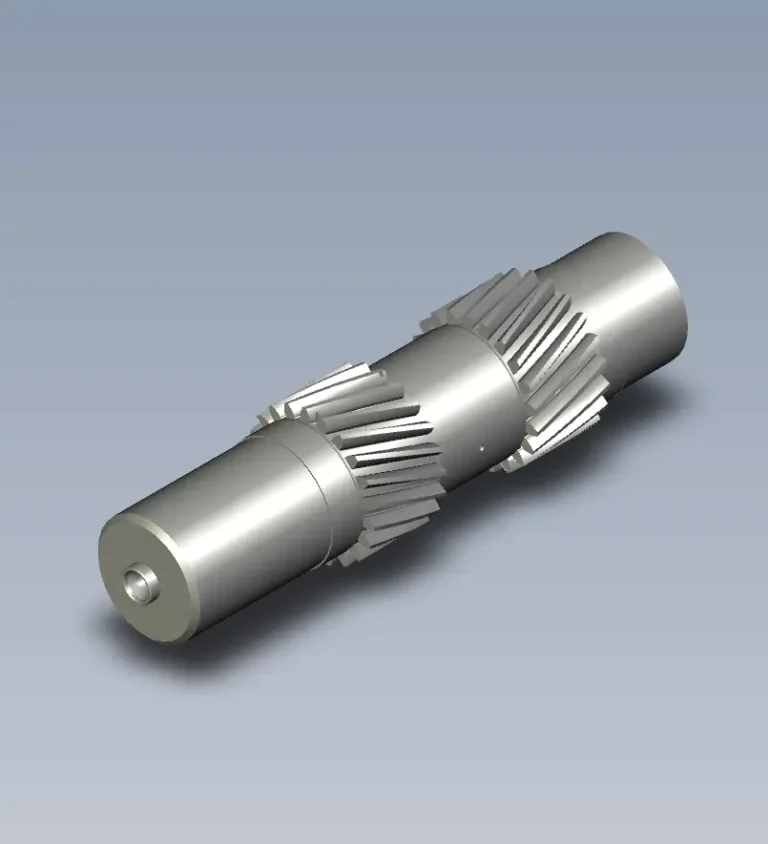
| Gear Shaft | Turning + gear cutting + additional machining |
| Prototype Gear | Flexible machining processes may be more economical |
The previous article in this series discussed gear hobbing vs gear shaping vs gear milling in more detail.
For a production order, the best process depends on the gear geometry, quantity, accuracy requirements, available tooling, and production equipment.
Choosing the right process can reduce both manufacturing time and unnecessary production costs.
6. Order Quantity Has a Major Impact on Unit Price
Production quantity is one of the most obvious factors affecting custom gear price.
A supplier needs to account for:
- Material preparation
- Machine setup
- Tool preparation
- Programming
- First-piece inspection
- Production time
- Final inspection
- Packaging
These fixed or semi-fixed costs are distributed across the order quantity.
For example:
| Order Situation | Typical Cost Structure |
|---|---|
| 1–5 prototype gears | High setup cost per piece |
| 10–50 pieces | Small-batch production |
| 100–500 pieces | More efficient production |
| 500+ pieces | Greater opportunity for production optimization |
| Large recurring orders | Potential for optimized tooling and process planning |
These are planning categories rather than universal industry price thresholds. The actual economic breakpoint depends on gear geometry, material, tooling, machine availability, tolerances, and supplier process.
This is why an overseas buyer should always provide the expected annual volume, not just the quantity required for the first order.
A supplier may be able to recommend a more cost-effective manufacturing route when the long-term demand is known.
7. Surface Finishing and Secondary Operations
A gear may require additional operations after basic gear cutting.
Examples include:
- Gear grinding
- Deburring
- Honing
- Polishing
- Surface coating
- Black oxide
- Phosphate treatment
- Corrosion protection
These operations can improve dimensional accuracy, surface condition, wear resistance, or corrosion resistance.
However, every additional operation increases processing time and cost.
For example, a buyer who requires a hardened and ground gear should expect a different manufacturing price from a buyer who needs only a conventionally machined gear.
The key is to specify which requirements are actually necessary for the application’s performance.
8. Inspection, Documentation, and Quality Requirements
Inspection is another important component of the total gear manufacturing cost.
Depending on the application, a buyer may require:
- Dimensional inspection
- Gear tooth inspection
- Runout measurement
- Hardness testing
- Material certification
- Inspection reports
- Surface roughness measurement
- Gear profile and lead measurement
ISO/TR 10064-1:2019 provides inspection guidance for cylindrical involute gear tooth flanks, including measurement of pitch, profile, helix, and tangential composite characteristics.
Higher inspection requirements generally require more measurement time and specialized equipment.
However, for critical transmission components, inspection should be viewed as part of quality assurance, not simply an additional cost.
Custom Gear Cost Breakdown: What Really Determines the Price?
When evaluating a quotation, overseas buyers can use the following framework:
| Cost Factor | Low-Cost Scenario | Higher-Cost Scenario |
|---|---|---|
| Material | Standard steel | Specialized alloy/stainless steel |
| Size | Small gear | Large/heavy gear |
| Geometry | Standard spur gear | Complex/custom geometry |
| Accuracy | General tolerance | Tight gear tolerances |
| Heat Treatment | None | Hardened / carburized / nitrided |
| Finishing | Basic deburring | Grinding / honing |
| Quantity | Prototype | Production volume |
| Inspection | Basic dimensional check | Full gear inspection + reports |
| Packaging | Standard | Customized export packaging |
This is why comparing only the final unit price can be misleading.
Two quotations may look similar on paper while including very different manufacturing and quality-control requirements.
How to Reduce Custom Gear Manufacturing Cost
If your goal is to obtain a competitive gear price without sacrificing necessary quality, consider these strategies.
1. Provide a Complete Drawing
A complete 2D drawing or 3D CAD model reduces uncertainty and helps the manufacturer prepare an accurate quotation.
2. Avoid Unnecessary Tight Tolerances
Do not specify extremely tight tolerances unless they are required by the application.
Tighter tolerances generally require more precise manufacturing and inspection.
3. Choose Material Based on Application
More expensive material is not automatically better.
Select material based on:
- Load
- Wear
- Environment
- Required hardness
- Service life
- Manufacturing requirements
4. Provide Realistic Quantities
If you expect repeat orders, tell the supplier your estimated annual demand.
This allows the manufacturer to evaluate tooling, setup, and production efficiency more effectively.
5. Discuss the Manufacturing Process
Instead of specifying only the final product, ask the manufacturer:
“Which manufacturing process would you recommend for this gear and why?”
An experienced manufacturer may identify a more efficient process without compromising the required performance.
How to Request an Accurate Custom Gear Quote
For overseas OEM buyers, the following information can significantly improve quotation accuracy.
Gear Information
- Gear type
- Module or diametral pitch
- Number of teeth
- Pressure angle
- Helix angle
- Outside diameter
- Face width
- Bore diameter
- Material
- Heat treatment
- Accuracy requirements
- Surface finish
Commercial Information
- Prototype quantity
- Production quantity
- Estimated annual demand
- Destination country
- Packaging requirements
- Required delivery date
The more complete the RFQ, the less likely the quotation will need to be revised later.
Why Choose Qiming Precision Machinery for Custom Gears?
For overseas buyers, choosing a gear supplier is about more than finding the lowest unit price.
Qiming Precision Machinery focuses on custom machining and industrial transmission components, including custom gears, transmission shafts, gear-related components, and other precision-machined parts.
Our OEM approach allows customers to work from:
- 2D engineering drawings
- 3D CAD files
- Existing samples
- Technical specifications
Instead of offering a one-size-fits-all production solution, Qiming can evaluate the required material, gear geometry, machining route, finishing requirements, inspection needs, and production quantity before quotation.
This is particularly valuable for overseas customers who need a supplier capable of supporting both prototype development and repeat OEM production.
For projects involving multiple transmission components, Qiming can also support related parts such as gears, shafts, and gear shafts, helping buyers consolidate sourcing instead of managing multiple suppliers for closely related components.
Frequently Asked Questions
How much does a custom gear cost?
There is no universal price for a custom gear. The cost depends mainly on material, gear size, module, number of teeth, geometry, accuracy, heat treatment, finishing, quantity, and inspection requirements.
What is the biggest factor affecting gear price?
There is no single biggest factor for every project. For many custom gears, material, size, machining complexity, accuracy, heat treatment, and order quantity can all have significant effects on the final price.
Are custom gears expensive?
Not necessarily. Simple gears produced in suitable materials and reasonable quantities can be cost-effective. The price increases when the project requires complex geometry, tight tolerances, specialized materials, heat treatment, grinding, or extensive inspection.
How can I reduce custom gear manufacturing cost?
Provide complete drawings, avoid unnecessary tolerances, select material based on actual application requirements, optimize order quantity, and discuss the manufacturing process with your supplier.
Does gear accuracy affect the price?
Yes. Higher accuracy requirements can require more precise machining, additional finishing operations, and more detailed inspection. ISO 1328-1:2013 provides a standardized flank-tolerance classification system for cylindrical involute gears.
Is it cheaper to order more custom gears?
Generally, increasing production quantity can reduce the setup and tooling cost allocated to each part, but the actual unit-price reduction depends on the gear design, tooling, material, and production process.
What information should I send to a gear manufacturer for a quotation?
Ideally, provide a 2D drawing or 3D CAD model together with material, gear type, module, number of teeth, pressure angle, helix angle, accuracy requirements, heat treatment, quantity, and delivery requirements.
Can Qiming manufacture custom gears according to customer drawings?
Yes. Qiming Precision Machinery supports drawing-based OEM manufacturing. Overseas customers can provide 2D drawings, 3D CAD files, samples, or technical specifications for project evaluation and quotation.
Final Thoughts: The Cheapest Gear Is Not Always the Lowest-Cost Solution
When comparing custom gear manufacturing prices, overseas buyers should look beyond the unit price.
A competitive gear supplier should be able to balance:
Material + Manufacturing Process + Accuracy + Heat Treatment + Quantity + Inspection + Service Life
The goal is not simply to purchase the cheapest gear.
The goal is to obtain the right gear at the right total cost while meeting the required performance and quality standards.
If you are sourcing custom gears from China, send Qiming Precision Machinery your 2D drawing, 3D CAD model, sample, or technical specifications.
Our team can review your requirements and recommend a suitable manufacturing approach before preparing a quotation for your project.