Gear Hobbing vs Gear Shaping vs Gear Milling: How to Choose the Right Gear Manufacturing Process
Choosing the right gear manufacturing process directly affects gear quality, production cost, lead time, and long-term transmission performance. For OEM buyers and mechanical engineers, three commonly considered processes are gear hobbing, gear shaping, and gear milling.
About Us – Changzhou Qiming Precision Machinery Co., Ltd
But which process is right for your custom gear?
The answer depends on the gear type, tooth geometry, material, required accuracy, production volume, and application. There is no single machining process that is best for every gear.
This guide compares gear hobbing vs gear shaping vs gear milling and explains when each process makes sense for industrial gear manufacturing.
Gear Hobbing vs Gear Shaping vs Gear Milling at a Glance
| Factor | Gear Hobbing | Gear Shaping | Gear Milling |
|---|---|---|---|
| Basic Method | Continuous cutting with a hob | Reciprocating cutter | Milling cutter removes teeth individually |
| Best For | External spur and helical gears | Internal and external gears | Prototypes, special gears, low-volume production |
| Production Volume | Medium to high | Low to high | Low to medium |
| Production Efficiency | High | Medium | Lower |
| Internal Gears | Generally unsuitable | Excellent | Possible depending on geometry |
| External Gears | Excellent | Excellent | Good |
| Complex/Special Profiles | Limited | Good | Very flexible |
| Tooling Cost | Moderate | Moderate | Relatively low for small batches |
| Setup Flexibility | Medium | High | High |
| Typical Application | Mass-production gears | Internal gears and specialized gears | Prototype and custom gears |
The best process should be selected according to the actual engineering requirements rather than simply choosing the most advanced or fastest process.
1. What Is Gear Hobbing?
Gear hobbing is a continuous gear-cutting process that uses a rotating cutting tool called a hob.
The hob and workpiece rotate in a coordinated relationship while the cutting tool gradually generates the gear teeth.
Because gear hobbing is a continuous process, it can be highly productive for suitable gear geometries.
Advantages of Gear Hobbing
- High production efficiency
- Suitable for medium- and high-volume production
- Excellent for external spur gears
- Suitable for many helical gear applications
- Consistent tooth generation
- Suitable for automated production
- Competitive unit cost at larger quantities
Gear hobbing is therefore often considered when a buyer needs a large number of similar gears with consistent geometry.
Typical Applications
Gear hobbing is commonly considered for:
- Industrial gearboxes
- Transmission components
- Conveyor systems
- Agricultural machinery
- Automotive components
- Industrial automation
- Power transmission equipment
For a standard external gear with repeat production requirements, gear hobbing can often provide a good balance between productivity, consistency, and manufacturing cost.
2. What Is Gear Shaping?
Gear shaping uses a reciprocating cutter to generate gear teeth. The cutting tool and workpiece rotate in a synchronized relationship while the cutter moves back and forth.
One major advantage of gear shaping is its flexibility for gear geometries that may not be suitable for conventional hobbing.
In particular, internal gears are an important application for gear shaping.
Advantages of Gear Shaping
- Suitable for internal gears
- Suitable for external gears
- Good flexibility for certain gear geometries
- Useful when gear location or geometry makes hobbing impractical
- Suitable for both prototype and production applications
Typical Applications
Gear shaping may be considered for:
- Internal gears
- Planetary gear components
- External spur gears
- Certain specialized transmission components
- Components with geometric restrictions
For OEM buyers requiring custom internal gears, gear shaping can be particularly important.
3. What Is Gear Milling?
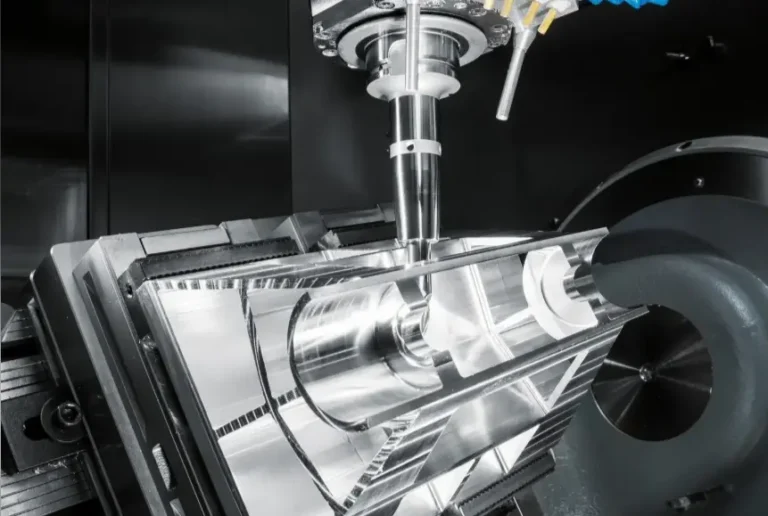
Gear milling uses a milling cutter to machine the gear teeth. Depending on the equipment and tooling, the teeth can be generated or machined individually.
Compared with continuous hobbing, gear milling generally offers greater flexibility for certain low-volume or specialized projects.
This makes it useful when a customer needs:
- Prototypes
- Small production batches
- Special tooth profiles
- Custom dimensions
- Engineering samples
- One-off replacement components
Advantages of Gear Milling
- High flexibility
- Suitable for prototypes
- Useful for low-volume production
- Lower dependence on dedicated production tooling for some projects
- Suitable for special or non-standard gear requirements
The trade-off is that gear milling can be less productive than continuous hobbing when producing large quantities of standard gears.
4. Gear Hobbing vs Gear Shaping vs Gear Milling: Which Is More Suitable?
The most important difference is not simply machining speed. It is what type of gear you need and how many you need.
Choose Gear Hobbing When:
- You need external gears
- Gear geometry is suitable for hobbing
- Production volume is medium or high
- Consistent production is important
- You want competitive unit cost at higher quantities
Choose Gear Shaping When:
- You need internal gears
- Gear geometry makes hobbing unsuitable
- You need flexibility for certain gear configurations
- You are manufacturing planetary or specialized components
Choose Gear Milling When:
- You need prototypes
- Production quantity is relatively low
- The gear is highly customized
- You need flexibility during product development
- The geometry is better suited to milling
A professional gear manufacturer should therefore select the process based on the drawing and application rather than forcing every project into one machining method.
5. How Gear Manufacturing Process Affects Cost
For overseas buyers, manufacturing cost is an important part of supplier selection.
However, the cheapest machining process is not always the cheapest overall solution.
The final cost of a custom gear can be affected by:
| Cost Factor | Impact on Gear Cost |
|---|---|
| Material | Affects raw material and machining cost |
| Gear Size | Larger gears generally require more machining time |
| Number of Teeth | Influences machining requirements |
| Module / DP | Determines tooth geometry |
| Gear Width | Affects material and processing time |
| Accuracy Requirement | Higher precision may require additional operations |
| Heat Treatment | Adds processing and inspection requirements |
| Surface Finish | May require grinding or finishing |
| Production Quantity | Influences tooling and setup cost per piece |
| Inspection Requirements | Higher requirements can increase inspection time |
For example, a gear produced in a batch of 1,000 pieces may have a very different unit economics from a prototype produced in quantities of 5 or 10.
This is why an experienced custom gear manufacturer should evaluate the complete project before recommending a manufacturing process.
6. Does the Manufacturing Process Determine Gear Accuracy?
Not by itself.
Gear accuracy depends on multiple factors, including:
- Machine capability
- Tool condition
- Workholding
- Material stability
- Heat treatment
- Finishing operations
- Inspection methods
- Manufacturing process control
For cylindrical involute gears, ISO 1328-1:2013 establishes a classification system for gear flank tolerances. The standard defines 11 flank tolerance classes, numbered 1 through 11 in order of increasing tolerance, and provides allowable values for relevant deviations. Its stated scope covers gears with 5–1,000 teeth, reference diameters of 5–15,000 mm, normal modules of 0.5–70 mm, face widths up to 1,200 mm, and helix angles up to 45°.
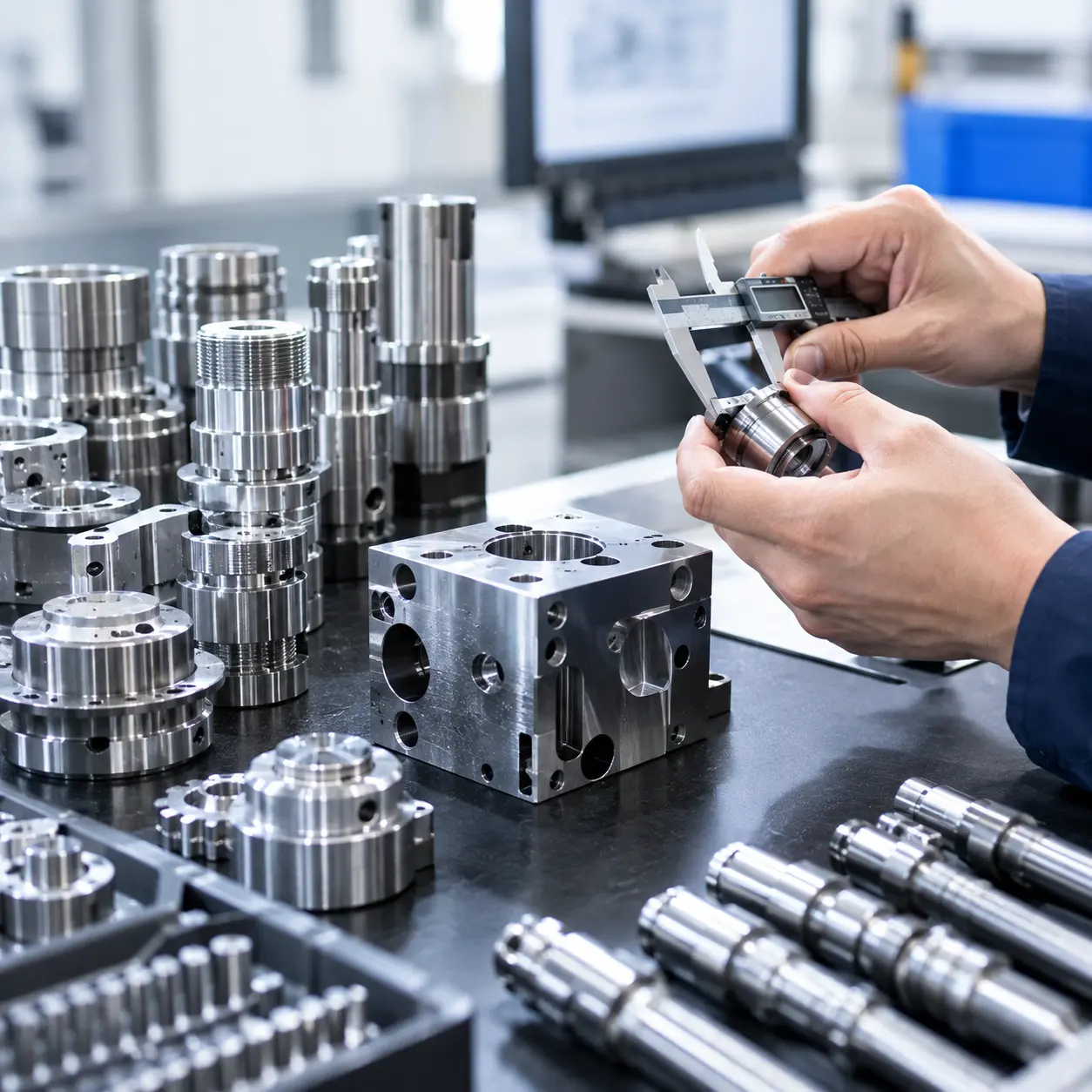
For buyers, this is important because “high precision gear” should not be treated as a vague marketing term.
The drawing or purchase specification should define the required tolerances and inspection requirements.
ISO also provides a separate inspection practice, ISO/TR 10064-1:2019, covering measurement of gear-tooth characteristics such as pitch, profile, helix, and tangential composite characteristics.
7. Gear Hobbing vs Gear Shaping vs Gear Milling: Practical Selection Guide
A simple decision process can help buyers choose the right manufacturing route.
Step 1: Identify the Gear Type
Is it:
- Spur gear?
- Helical gear?
- Internal gear?
- Special gear?
- Gear shaft?
- Prototype gear?
The gear geometry determines which processes are practical.
Step 2: Determine Production Quantity
For example:
1–10 pieces:
Prototype-oriented machining may be more appropriate.
10–500 pieces:
The best solution depends heavily on geometry, tooling, and setup requirements.
500+ pieces:
Production efficiency becomes increasingly important, making continuous processes such as hobbing attractive when the geometry is suitable.
These quantity ranges are planning examples rather than universal industry thresholds. Actual economics depend on gear size, tooling, machine availability, material, tolerances, and supplier setup.
Step 3: Define Accuracy Requirements
Specify:
- Gear accuracy
- Profile tolerance
- Lead/helix tolerance
- Runout
- Tooth thickness
- Backlash
- Surface roughness
Do not simply tell a supplier that you need a “high-precision gear.”
Step 4: Consider Heat Treatment
Depending on the application, gears may require processes such as:
- Carburizing
- Hardening
- Nitriding
- Induction hardening
Heat treatment can improve wear resistance and mechanical performance, but it can also introduce dimensional changes that must be considered during manufacturing and inspection.
Step 5: Select the Complete Manufacturing Route
A custom gear may follow a process such as:
Material → CNC Turning → Gear Cutting → Heat Treatment → Grinding/Finishing → Inspection → Packaging
The exact process depends on the gear design and performance requirements.
8. Why Process Selection Matters for Overseas OEM Buyers
When sourcing custom gears from China, overseas buyers often focus first on unit price.
However, the manufacturing process behind that price can be equally important.
A quotation should ideally be evaluated together with:
- Material specification
- Gear-cutting process
- Heat-treatment method
- Accuracy requirements
- Inspection standard
- Production quantity
- Lead time
- Packaging
- Quality documentation
Two suppliers may quote different prices for the same drawing because their manufacturing routes, equipment, inspection requirements, and production methods are different.
For this reason, comparing quotations based only on price can lead to misleading conclusions.
9. Why Work With Qiming Precision Machinery?
For custom industrial components, the manufacturing process should be selected according to the customer’s actual application rather than according to a fixed production method.
Qiming Precision Machinery supports custom machining and transmission-component manufacturing for industrial customers, including gears, transmission shafts, bearings and gear-related components, molds, metal tools, and other precision-machined parts.
Our approach is centered on:
Drawing-Based Manufacturing
Customers can provide:
- 2D engineering drawings
- 3D CAD models
- Existing samples
- Technical specifications
Our team can review the requirements before determining the appropriate manufacturing route.
Custom OEM Production
Instead of limiting customers to standard catalog products, Qiming focuses on custom OEM manufacturing for industrial applications.
Integrated Component Thinking
Gears are often only one part of a larger transmission system.
For projects involving gears, shafts, gear shafts, and other transmission components, evaluating the components together can help reduce compatibility problems during assembly.
Quality-Focused Production
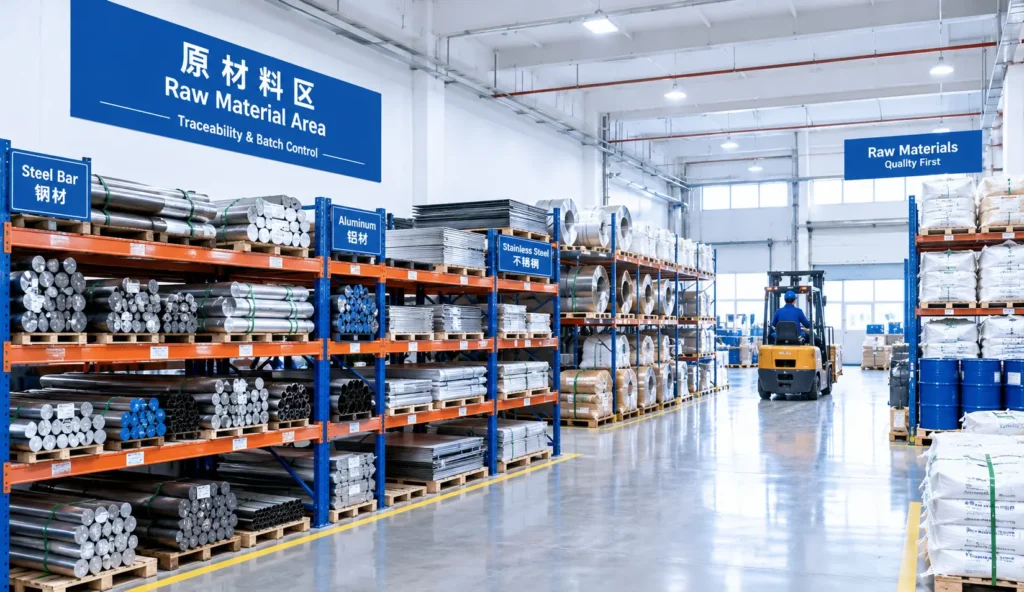
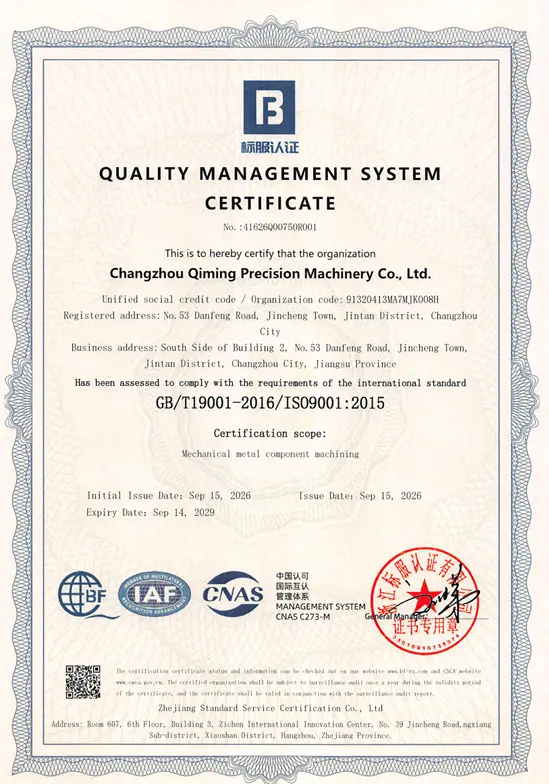
For precision transmission components, dimensional accuracy is only one part of quality. Material verification, machining consistency, heat treatment, surface condition, and final inspection all contribute to the performance of the finished component.
10. Gear Manufacturing Process: What Should You Ask Your Supplier?
Before placing an OEM gear order, ask your supplier:
- Which gear-cutting process will you use?
- Why is this process suitable for my gear?
- What material will be used?
- What gear accuracy can you achieve?
- Is heat treatment required?
- How will dimensional changes after heat treatment be controlled?
- What inspection equipment is available?
- Can you provide inspection reports?
- Can you manufacture both gears and shafts?
- Can you support prototype and production orders?
A capable supplier should be able to explain why a specific manufacturing process is appropriate, not simply provide a price.
Frequently Asked Questions
Is gear hobbing better than gear shaping?
Neither process is universally better. Gear hobbing is highly productive for suitable external gears, while gear shaping provides important advantages for internal gears and certain specialized geometries.
Is gear milling suitable for custom gears?
Yes. Gear milling can be useful for prototypes, low-volume production, special gears, and applications where flexibility is more important than maximum production efficiency.
Which gear manufacturing process is best for mass production?
For suitable external gear geometries, gear hobbing is often attractive for medium- and high-volume production because it is a continuous cutting process. The final choice should still consider gear geometry, tooling, material, accuracy, and production economics.
Can gear shaping manufacture internal gears?
Yes. Internal gear production is one of the important applications where gear shaping can provide an advantage over conventional external-gear hobbing.
Which process is best for prototype gears?
For prototypes, gear milling can offer useful flexibility because it can avoid some of the production setup considerations associated with higher-volume manufacturing. However, the most appropriate process depends on the gear geometry and required accuracy.
Does gear manufacturing method affect gear accuracy?
Yes, the manufacturing method can influence achievable accuracy, but accuracy also depends on machine capability, tooling, workholding, material, heat treatment, finishing, process control, and inspection. Gear accuracy should therefore be specified and verified according to the applicable engineering requirements. ISO 1328-1:2013 provides a standardized classification system for cylindrical gear flank tolerances.
How can I choose a gear manufacturer in China?
Look beyond unit price. Evaluate the supplier’s gear-manufacturing capabilities, machining processes, material control, heat-treatment options, inspection capabilities, engineering support, production capacity, and experience with OEM drawings.
Conclusion: Choose the Process Based on the Gear, Not the Other Way Around
There is no universally superior gear manufacturing process.
Gear hobbing is a strong option for suitable external gears and production-oriented applications.
Gear shaping provides important flexibility, particularly for internal gears and certain specialized geometries.
Gear milling is useful when flexibility, prototyping, and low-volume custom production are priorities.
The right choice depends on the complete combination of gear geometry, material, accuracy, production quantity, heat treatment, application requirements, and total manufacturing cost.
For overseas buyers sourcing custom gears from China, the best supplier is not necessarily the one offering the lowest price. It is the manufacturer that can understand your drawing, select the appropriate manufacturing process, control the critical dimensions, and consistently deliver the required components.
Need help selecting the right gear manufacturing process?
Send Qiming Precision Machinery your 2D drawing, 3D CAD model, sample, or technical specifications. Our team can review your requirements and recommend a suitable manufacturing approach for your custom gears or transmission components.