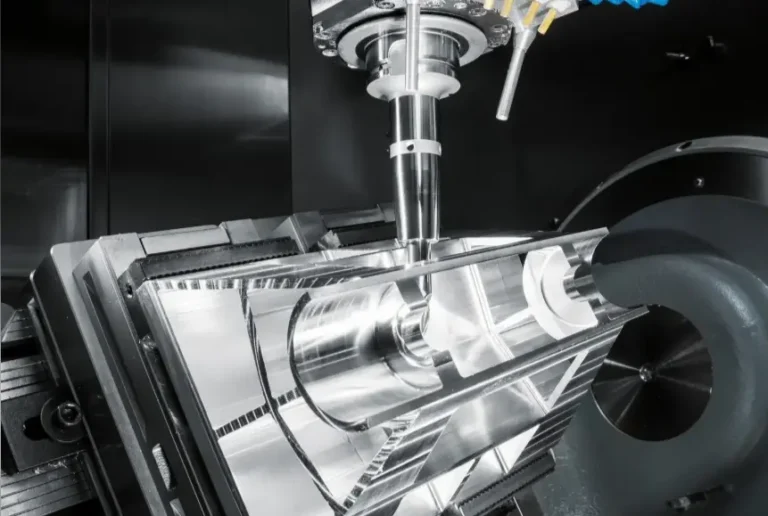
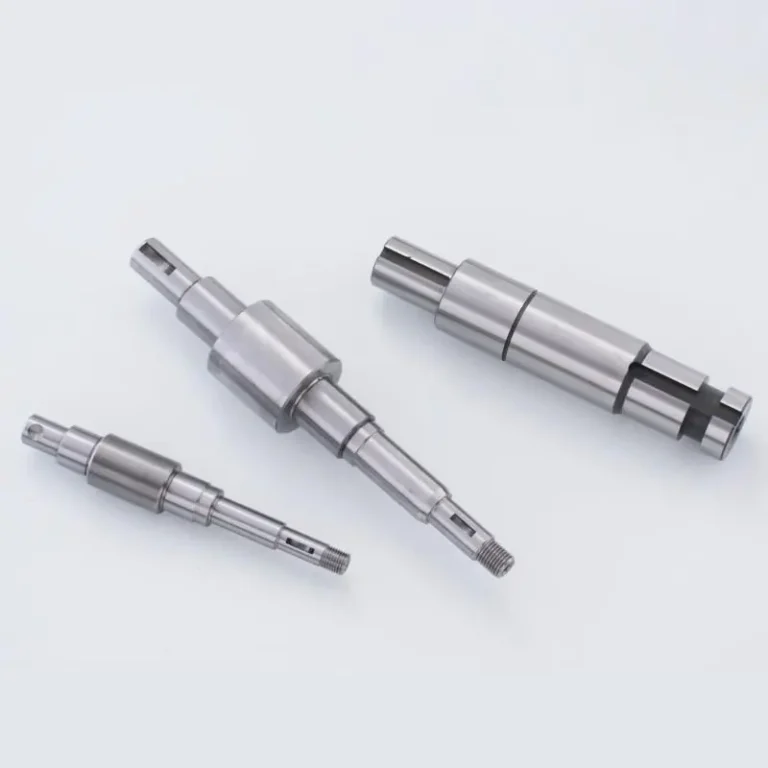
What Are Transmission Shafts Used For? Applications, Types & Selection Guide
What Are Transmission Shafts Used For?
Transmission shafts are mechanical components designed to transfer rotational motion and torque from one part of a machine to another. They are found in gearboxes, industrial drives, pumps, compressors, conveyors, agricultural machinery, construction equipment, production lines, and many other mechanical systems.
In simple terms, a transmission shaft connects the source of mechanical power with the component that needs to use that power.
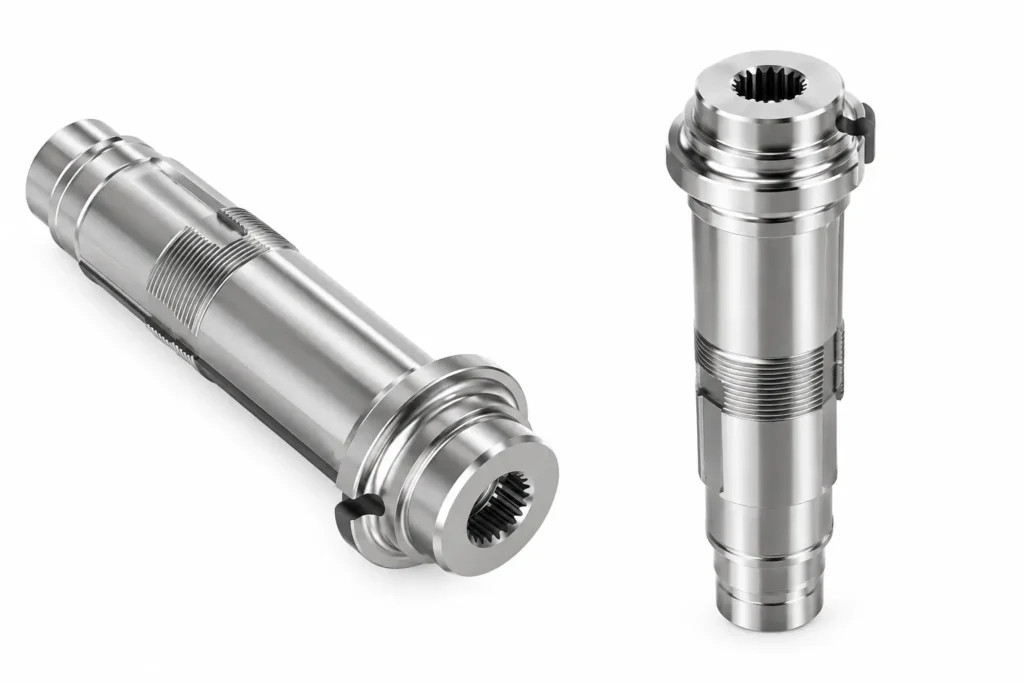
For example, a motor may generate rotational power, but the motor itself is not always positioned directly beside the driven component. A power transmission shaft can transfer that rotation through gears, couplings, pulleys, sprockets, or other mechanical elements.
ISO places shafts and couplings within the broader mechanical-systems category covering shafts, keys and keyways, splines, couplings, and balancing. This reflects how fundamental shafts are to rotating machinery.
For equipment manufacturers and industrial buyers, choosing the right transmission shaft is therefore not simply a matter of selecting a cylindrical metal component. Shaft diameter, material, length, keyways, splines, tolerances, surface finish, heat treatment, and balancing requirements can all influence machine performance and service life.
How Does a Transmission Shaft Work?
A transmission shaft normally receives torque from a driving component and transfers it to a driven component.
A simplified power-transmission system may look like this:
Motor → Coupling → Transmission Shaft → Gear / Pulley / Sprocket → Driven Machine
The shaft may experience several types of mechanical loading at the same time:
- Torsional loading from transmitted torque
- Bending caused by gears, pulleys, or external loads
- Radial loading from bearings
- Axial loading in some machine configurations
- Cyclic loading during repeated operation
- Vibrations and dynamic loads at higher rotational speeds
This is why a shaft that looks simple from the outside can require relatively sophisticated engineering and machining.
The required shaft size is influenced by torque, rotational speed, material strength, shaft geometry, support conditions, and the application’s duty cycle.
For example, in a rotating system:
Power = Torque × Angular Speed
As rotational speed increases, the same power can theoretically be transmitted with lower torque, but higher-speed applications also make dynamic balance, concentricity, surface quality, and assembly accuracy increasingly important.
Main Applications of Transmission Shafts
Transmission shafts are used across a wide range of industrial machinery.
| Application | Typical Shaft Function | Common Related Components |
|---|---|---|
| Gearboxes | Transfer torque between gear stages | Gears, bearings, keys |
| Industrial conveyors | Transfer rotational power | Sprockets, pulleys, bearings |
| Pumps | Connect drive source to impeller or rotating assembly | Couplings, seals, bearings |
| Compressors | Transfer power to compression mechanism | Couplings, gears, bearings |
| Machine tools | Transfer rotational motion | Spindles, gears, pulleys |
| Agricultural machinery | Transmit power between mechanical systems | Gears, splines, couplings |
| Construction equipment | Transfer high mechanical loads | Gears, bearings, couplings |
| Production machinery | Connect drive systems to working mechanisms | Pulleys, sprockets, gear sets |
| Reducers | Transfer torque through reduction stages | Helical gears, bevel gears |
| Material-handling equipment | Drive rollers and moving mechanisms | Chains, sprockets, bearings |
This broad application range explains why custom transmission shafts are common in industrial B2B purchasing. Different machines often require different shaft dimensions, interfaces, materials, and tolerances.
1. Transmission Shafts in Gearboxes and Speed Reducers
One of the most common applications is inside gearboxes and gear speed reducers.
A gearbox uses gears to change speed, torque, or rotational direction. The transmission shaft provides the mechanical connection between the gears and the rest of the system.
Depending on the gearbox design, manufacturers may use:
- Input shafts
- Intermediate shafts
- Output shafts
- Gear shafts
- Hollow shafts
- Splined shafts
The shaft must maintain accurate relationships between gears, bearings, keyways, and other components.
For custom gearbox manufacturers, shaft geometry is therefore closely connected to gear accuracy and bearing positioning.
2. Transmission Shafts in Pumps and Compressors
Pumps and compressors also rely heavily on rotating shafts.
In a pump, the shaft may transfer power from an electric motor or other driver to the impeller or rotor. In compressors, shafts can transfer rotational power to the compression mechanism.
These applications can place high demands on:
- Concentricity
- Surface finish
- Bearing fits
- Seal areas
- Corrosion resistance
- Dynamic balance
- Material selection
The correct shaft design depends on the machine architecture and operating environment rather than simply the required diameter.
3. Transmission Shafts in Conveyors and Material-Handling Equipment
Industrial conveyor systems use shafts to transfer power to rollers, sprockets, pulleys, or other moving components.
A conveyor drive shaft may need to handle continuous operation and repeated torque loads.
Common configurations include:
Motor → Gear Reducer → Drive Shaft → Sprocket → Conveyor
For these applications, buyers should pay particular attention to shaft length, bearing locations, keyways, sprocket mounting dimensions, and allowable runout.
A small dimensional error at the interface can create assembly problems even when the overall shaft dimensions appear correct.
4. Transmission Shafts in Agricultural and Construction Machinery
Agricultural machinery and construction equipment frequently operate under demanding conditions.
Transmission shafts may be exposed to:
- High torque
- Shock loads
- Dust and contamination
- Temperature variations
- Repeated load cycles
- Outdoor operating environments
Applications can include tractors, harvesters, material-handling equipment, construction machinery, and specialized mechanical systems.
In these applications, material selection and heat-treatment requirements can become particularly important because shaft failure can result in significant equipment downtime.
5. Transmission Shafts in Machine Tools and Production Equipment
Precision manufacturing equipment often requires precision transmission shafts with controlled dimensions and surface quality.
Shafts may be used to transmit motion between:
- Motors
- Gear trains
- Pulleys
- Spindles
- Feed mechanisms
- Rotary tools
For precision machinery, buyers should not evaluate a shaft only by dimensional accuracy. Geometric relationships between multiple features are also important.
For example, the relationship between a bearing journal, keyway, threaded section, and gear seat may determine whether the shaft can be assembled correctly and operate smoothly.
What Types of Transmission Shafts Are Commonly Used?
There is no single universal transmission shaft design.
| Shaft Type | Typical Application | Main Advantage |
|---|---|---|
| Solid Shaft | General machinery | High structural strength |
| Hollow Shaft | Weight-sensitive systems | Lower mass and material usage |
| Keyed Shaft | Gear and pulley systems | Simple torque transmission |
| Splined Shaft | High-torque applications | Positive torque transfer |
| Stepped Shaft | Multi-component assemblies | Different mounting diameters |
| Gear Shaft | Gearboxes and reducers | Gear integrated with shaft |
| Flanged Shaft | Coupled machinery | Convenient connection |
| Custom CNC Shaft | Specialized equipment | Application-specific geometry |
The choice depends on torque, speed, available space, assembly method, load conditions, and the interface with other components.
What Should Buyers Consider When Sourcing Transmission Shafts?
For overseas buyers sourcing custom transmission shafts, the drawing is usually the most important starting point.
A good RFQ should ideally include:
- 2D engineering drawing with dimensions and tolerances
- 3D CAD model such as STEP when available
- Material specification
- Overall shaft length and critical diameters
- Keyway, spline, thread, or gear requirements
- Surface roughness requirements
- Heat-treatment requirements
- Quantity and expected annual demand
- Inspection requirements
- Application and operating conditions
Important dimensions for a transmission shaft RFQ
| Requirement | Why It Matters |
|---|---|
| Shaft diameter | Determines fit, strength, and bearing compatibility |
| Length | Affects bending and assembly |
| Diameter tolerance | Controls component fit |
| Concentricity / runout | Influences rotating accuracy |
| Keyway dimensions | Determines torque-transfer interface |
| Spline dimensions | Determines connection compatibility |
| Thread specification | Ensures correct fastening |
| Material | Influences strength and durability |
| Heat treatment | Can improve mechanical properties |
| Surface roughness | Important for bearings and seals |
| Quantity | Affects manufacturing and quotation strategy |
For dimensional fits and shaft tolerances, ISO 286-2 provides standardized tolerance classes and limit deviations for holes and shafts.
Why Dynamic Balance Matters for High-Speed Transmission Shafts
For rotating components, balance can become an important engineering consideration as operating speed increases.
ISO 21940-11 establishes procedures and unbalance tolerances for rotors with rigid behaviour, while ISO 21940-12 addresses rotors with flexible behaviour.
ISO 21940-32 also addresses the balancing convention for keyed shaft-and-fitment assemblies, including the use of half-keys when balancing individual components.
This is particularly relevant to buyers sourcing high-speed transmission shafts, rotor shafts, and other rotating machinery components.
As a practical example, ISO 14691 covers flexible couplings used to transmit power between rotating shafts in general-purpose petroleum and petrochemical applications, with typical applications at speeds not exceeding 4,000 r/min. The standard also considers parallel offset, angular misalignment, and axial displacement.
The important takeaway is that shaft design cannot be separated from the rest of the rotating system.
Why Choose Changzhou Qiming for Custom Transmission Shafts?
For overseas buyers, a transmission shaft supplier should be evaluated not only on price but also on its ability to understand drawings, machining requirements, material specifications, and final application.
Changzhou Qiming Precision Machinery Co., Ltd. focuses on customized precision machinery components, including gears, gear shafts, transmission shafts, and other machined parts.
Our approach is based on the buyer’s technical requirements rather than a one-size-fits-all standard product.
Our advantages for international buyers include:
- Custom manufacturing according to drawings, samples, and technical specifications
- Experience with gears, gear shafts, transmission shafts, and machinery components
- CNC machining capabilities for customized mechanical parts
- Support for different shaft geometries and mechanical interfaces
- Attention to dimensional tolerances and critical features
- Flexible support for OEM and customized orders
- Technical communication for overseas B2B customers
- Ability to combine shaft and gear-related manufacturing requirements
For buyers developing a new gearbox, transmission system, production machine, or replacement component, providing the technical drawing and application information allows the manufacturing team to evaluate the requirements more accurately before quotation.
How to Request a Transmission Shaft Quote
If you are looking for a custom transmission shaft manufacturer, you do not need to prepare a complicated purchasing document before contacting a supplier.
The most useful information is:
Drawing + Material + Quantity + Tolerances + Surface Treatment + Application + Delivery Requirement
If you have a 2D drawing or 3D CAD model, send it together with your expected quantity.
If you do not have a complete drawing, you can provide photographs, existing samples, dimensions, or application information first. The manufacturer can then determine what additional technical information is needed.
For larger projects, it is also useful to provide annual demand and expected production volume because these factors can influence the recommended manufacturing process and quotation.
FAQ About Transmission Shafts
What is the main purpose of a transmission shaft?
The main purpose of a transmission shaft is to transfer rotational motion and torque between mechanical components such as motors, gears, pulleys, sprockets, couplings, and driven machinery.
Where are transmission shafts used?
Transmission shafts are widely used in gearboxes, speed reducers, conveyors, pumps, compressors, agricultural machinery, construction equipment, machine tools, production equipment, and other rotating machinery.
What is the difference between a transmission shaft and a gear shaft?
A transmission shaft primarily transfers torque and rotational motion, while a gear shaft may incorporate one or more gears directly onto the shaft. In some machines, the terms overlap because a gear shaft is itself a type of transmission component.
What materials are used for transmission shafts?
Steel is widely used for industrial shafts because it provides a combination of strength, machinability, toughness, and wear resistance. The exact material should be selected according to torque, fatigue loading, environment, heat treatment, and application requirements.
Can transmission shafts be custom manufactured?
Yes. Custom transmission shafts can be manufactured according to engineering drawings, CAD models, samples, or specified technical requirements. Dimensions, keyways, splines, threads, gears, materials, heat treatment, and surface requirements can be customized.
What information should I provide when requesting a quote?
At minimum, provide the shaft drawing or CAD model, material, quantity, critical tolerances, surface treatment requirements, and delivery requirements. Information about the machine and operating conditions is also useful when the design is not fully specified.
Conclusion: Transmission Shafts Are Critical to Modern Machinery
Although a transmission shaft may appear to be a relatively simple mechanical component, it plays a critical role in transferring power throughout industrial equipment.
From gearboxes and speed reducers to conveyors, pumps, compressors, agricultural equipment, and precision production machinery, transmission shafts connect rotating components and help convert motor power into useful mechanical motion.
For overseas buyers, the right supplier should be able to do more than simply machine a cylindrical shaft. The supplier should understand materials, tolerances, gear interfaces, keyways, splines, surface requirements, balancing, and the complete application.
If you are sourcing custom transmission shafts, gear shafts, or other precision mechanical components, Changzhou Qiming Precision Machinery Co., Ltd. can review your drawings or technical requirements and help determine a suitable manufacturing solution.
Send us your drawing, CAD file, sample information, or project requirements to request a customized quotation.