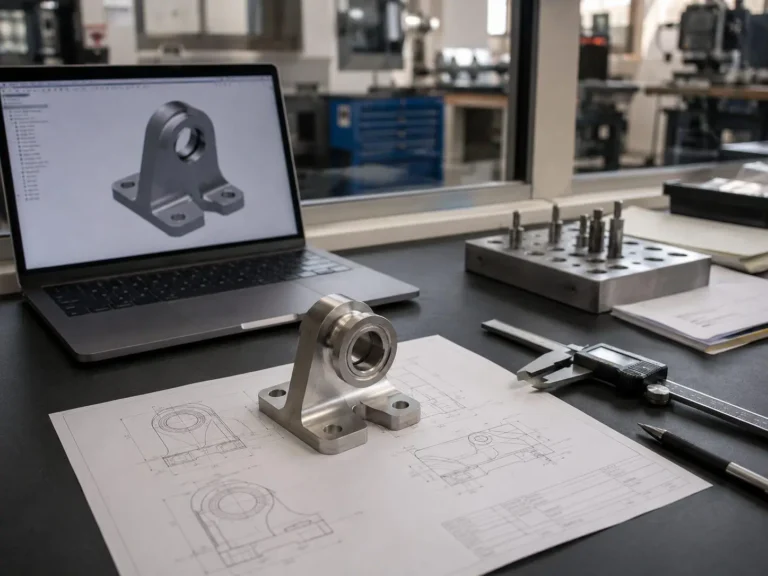
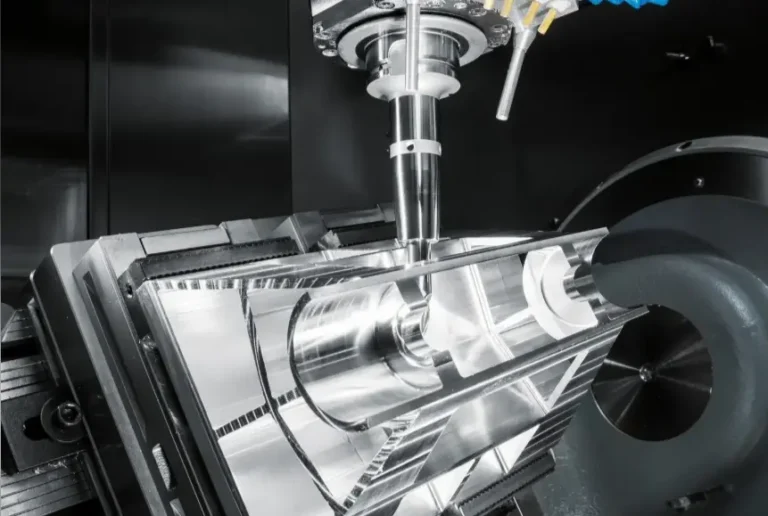
How to Choose a Gear Manufacturer in China: 10 Questions to Ask Before Ordering
Finding a reliable gear manufacturer in China can make a significant difference to your product quality, manufacturing costs, and long-term supply chain stability. China has a well-developed manufacturing industry, offering overseas buyers access to CNC machining, precision gear production, custom engineering, and OEM manufacturing services.
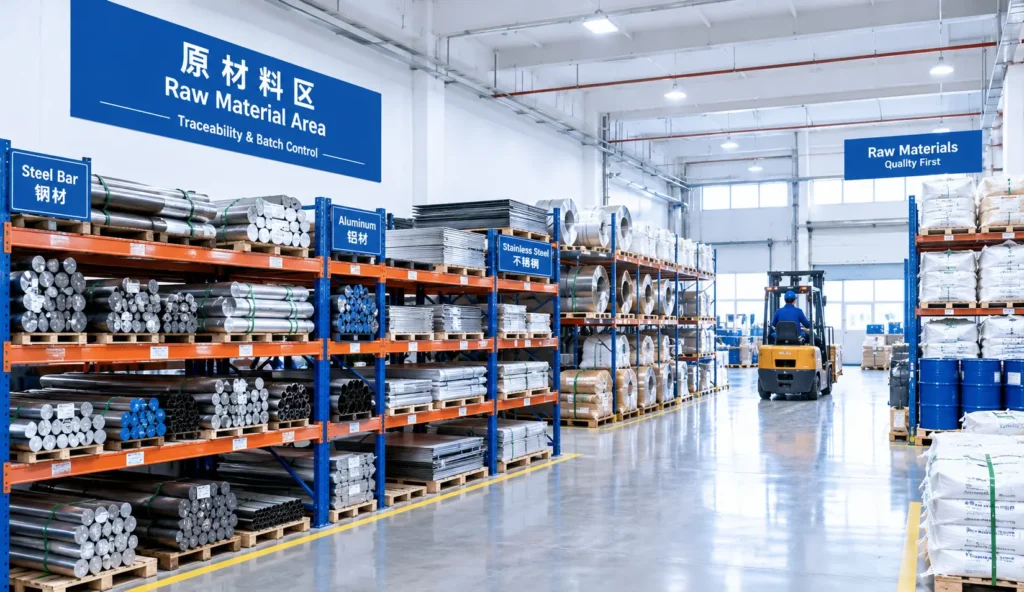
However, not every gear supplier has the same technical capabilities. Some specialize in standard gears, while others focus on custom gears, transmission components, or complete mechanical parts according to engineering drawings.
For international buyers, choosing a supplier should involve more than comparing prices. You need to understand the manufacturer’s machining capabilities, material knowledge, quality control procedures, production flexibility, and export experience.
Whether you are sourcing spur gears, helical gears, bevel gears, worm gears, or custom transmission components, asking the right questions before placing an order can help reduce sourcing risks.
At Changzhou Qiming Precision Machinery Co., Ltd., we support custom manufacturing of gears, gear shafts, transmission shafts, and precision machinery components. This guide explains 10 essential questions every overseas buyer should ask before choosing a Chinese gear manufacturer.
Why Source Gears from a Manufacturer in China?
China is an important global manufacturing and industrial supply-chain center. Overseas buyers can access a broad range of machining processes, material options, manufacturing partners, and customized production solutions.
Working directly with a Chinese gear manufacturer may offer several advantages:
- Competitive manufacturing costs
- Flexible OEM and ODM production
- Access to CNC machining and gear manufacturing capabilities
- Multiple material and surface-treatment options
- Custom production based on engineering drawings
- Opportunities to consolidate related mechanical components with one supplier
However, these advantages depend on the actual capabilities of the selected manufacturer.
The key is to identify a supplier that understands your technical requirements and can provide a suitable manufacturing solution.
10 Questions to Ask Before Choosing a Gear Manufacturer in China
The following checklist can help procurement managers, engineers, and international buyers evaluate potential gear suppliers.
| No. | Question to Ask | What You Need to Verify |
|---|---|---|
| 1 | What types of gears can you manufacture? | Product range and technical capability |
| 2 | What materials can you process? | Material knowledge and availability |
| 3 | What machining processes do you support? | Manufacturing capabilities |
| 4 | How do you control gear accuracy? | Tolerances and inspection methods |
| 5 | What quality management system do you follow? | Quality procedures and certifications |
| 6 | Can you manufacture according to custom drawings? | OEM/ODM flexibility |
| 7 | Can you provide samples before mass production? | Prototype and sample capability |
| 8 | What is your production capacity and lead time? | Delivery planning and consistency |
| 9 | How do you calculate your quotations? | Cost transparency |
| 10 | Can you support international orders? | Export communication and logistics |
1. What Types of Gears Can You Manufacture?
The first question is whether the supplier can manufacture the specific gear type required for your application.
Different transmission systems require different gear structures and machining processes.
Common industrial gear types include:
- Spur Gears: Straight teeth parallel to the gear axis, commonly used in parallel-shaft transmission systems.
- Helical Gears: Angled teeth that provide gradual tooth engagement and are widely used in industrial gearboxes.
- Bevel Gears: Used to transmit power between intersecting shafts.
- Worm Gears: Commonly used in applications requiring significant speed reduction.
- Internal Gears: Feature teeth on the inside surface and are used in compact transmission assemblies.
- Custom Gears: Designed according to specific mechanical structures and application requirements.
A qualified custom gear manufacturer should be able to review your drawings and determine whether the proposed gear structure can be produced using suitable manufacturing processes.
2. What Materials Can You Process?
Material selection directly affects gear strength, wear resistance, machinability, and service life.
Common materials used in industrial gear manufacturing include:
| Material | General Characteristics | Typical Applications |
|---|---|---|
| 20CrMnTi | Case-hardening steel | High-load transmission gears |
| 40Cr | Medium-carbon alloy steel | General mechanical components |
| 42CrMo | High-strength alloy steel | Heavy-duty transmission components |
| 4140 | Chromium-molybdenum alloy steel | Industrial gears and shafts |
| 4340 | High-strength alloy steel | High-stress mechanical applications |
| 45 Steel | General-purpose medium-carbon steel | General machinery components |
| Stainless Steel | Corrosion resistance | Special environments and equipment |
The correct material depends on operating load, rotational speed, working environment, required hardness, and expected service life.
Ask the manufacturer whether it can work with your specified material grade and coordinate the required heat-treatment or surface-treatment processes.
3. What Machining Processes Do You Support?
Manufacturing capability is one of the most important factors when selecting a CNC gear manufacturer.
Depending on gear geometry and production requirements, the manufacturing process may involve:
- CNC turning
- CNC milling
- Gear hobbing
- Gear shaping
- Gear grinding
- Drilling and tapping
- Keyway machining
- Heat treatment
- Surface finishing
Not every gear requires every process.
For example, a simple spur gear and a complex transmission gear shaft may require very different manufacturing routes.
Ask the supplier to explain how your component will be manufactured, which processes are performed internally, and which operations are coordinated with qualified external partners.
This helps you understand the actual supply chain behind your order.
4. How Do You Control Gear Accuracy?
Gear accuracy directly affects transmission performance.
Poor gear geometry may lead to excessive backlash, abnormal noise, vibration, uneven tooth contact, and premature wear.
Important inspection characteristics include:
- Tooth profile deviation
- Helix deviation
- Pitch deviation
- Tooth thickness
- Radial runout
- Surface roughness
For cylindrical involute gears, ISO 1328-1:2013 provides an internationally recognized system for classifying gear flank tolerances. The International Organization for Standardization (ISO) reviewed and confirmed this edition in 2024, so it remains current.
When evaluating a supplier, ask:
- Which gear characteristics can you measure?
- What inspection equipment is available?
- Can you provide gear measurement reports?
- Can you manufacture according to specified accuracy requirements?
Do not simply ask whether the supplier can manufacture high-precision gears. Request clear technical acceptance criteria.
5. What Quality Management System Do You Follow?
Quality management is essential for maintaining consistent production results.
Ask whether the manufacturer has a documented quality management system and whether it holds relevant third-party certifications.
One important reference is ISO 9001. On September 16, 2026, ISO published the sixth edition, ISO 9001:2026, replacing ISO 9001:2015.
According to ISO, the standard is used by more than one million organizations across 189 countries. It provides a framework for establishing, maintaining, and continually improving quality management systems.
However, buyers should distinguish between a manufacturer claiming to follow ISO principles and a company holding a valid, independently issued certification.
If certification is important to your project, request the certificate number, issuing certification body, scope, and validity.
You should also ask about:
- Incoming material inspection
- In-process quality control
- Final product inspection
- Nonconforming product management
- Inspection documentation
- Corrective and preventive actions
6. Can You Manufacture Gears According to Custom Drawings?
For OEM buyers, customized manufacturing is often more important than standard product availability.
Your project may require specific dimensions, tooth profiles, materials, shaft structures, keyways, tolerances, or surface treatments.
A capable OEM gear manufacturer should be able to review:
- 2D engineering drawings
- 3D CAD models
- Physical samples
- Material specifications
- Gear parameters
- Application requirements
Before confirming an order, ask the supplier to review the drawing and clarify any missing technical information.
This helps prevent misunderstandings during manufacturing and reduces the risk of receiving components that do not fit your assembly.
7. Can You Provide Samples Before Mass Production?
Sample production is an important step when developing custom gears.
Before approving a large order, buyers should request a prototype or first article where appropriate.
The sample evaluation may include:
- Overall dimensions
- Critical tolerances
- Gear tooth geometry
- Material verification
- Hardness requirements
- Surface quality
- Assembly compatibility
A sample approval process helps both parties confirm that the manufacturing solution meets the agreed technical requirements.
For more complex components, buyers should also establish how the approved sample and drawing revisions will be controlled during subsequent production.
8. What Is Your Production Capacity and Lead Time?
A supplier may produce a good sample but still struggle to meet the requirements of a repeat production order.
Before placing an order, discuss:
- Available manufacturing resources
- Current production workload
- Prototype lead time
- Mass production lead time
- Raw material availability
- Outsourced processing schedules
- Packaging and shipping preparation
Avoid accepting unrealistic delivery promises.
A professional supplier should provide a production schedule based on the actual manufacturing process, quantity, material availability, and inspection requirements.
For overseas buyers, reliable communication about production progress is equally important.
9. How Do You Calculate Your Gear Manufacturing Quotation?
Price is an important factor, but the lowest quotation does not necessarily represent the best value.
A custom gear manufacturing quotation may depend on:
| Cost Factor | Impact on Quotation |
|---|---|
| Raw Material | Material grade, size, and availability |
| Gear Design | Geometry and machining complexity |
| Machining Time | CNC operations and processing hours |
| Heat Treatment | Required process and hardness |
| Surface Treatment | Coating or finishing requirements |
| Inspection | Measurement requirements and documentation |
| Order Quantity | Setup cost and production efficiency |
| Packaging | Protection and export requirements |
When comparing quotations, make sure all suppliers are quoting against the same drawing revision, material specification, quantity, and inspection requirements.
You should also clarify whether tooling, sample charges, packaging, and shipping are included.
10. Can You Support International Orders?
For international buyers, choosing a gear manufacturer in China also means evaluating communication and export coordination.
Important considerations include:
- English-language technical communication
- Clear quotation documentation
- Production progress updates
- Export packaging
- Shipping arrangements
- Commercial documentation
- After-sales communication
A supplier that understands overseas purchasing requirements can make the sourcing process more efficient.
Before placing your first order, clarify payment terms, delivery terms, packaging requirements, and the process for handling quality issues.
Comparison: Reliable Gear Manufacturer vs. Unqualified Supplier
How can you distinguish a professional manufacturer from a supplier that may not be suitable for your project?
| Evaluation Area | Reliable Manufacturer | Potential Warning Sign |
|---|---|---|
| Technical Review | Reviews drawings and specifications | Quotes without understanding requirements |
| Materials | Confirms material grades | Provides vague material descriptions |
| Machining | Explains manufacturing processes | Cannot explain how parts are produced |
| Quality | Defines inspection criteria | Only promises that quality is guaranteed |
| Samples | Supports sample evaluation | Avoids sample verification |
| Pricing | Provides clear quotation details | Offers unexplained low prices |
| Communication | Provides technical feedback | Gives vague or delayed responses |
| Production | Discusses realistic lead times | Makes unsupported delivery promises |
The purpose of supplier evaluation is not to find a company that simply says yes to every requirement.
It is to find a manufacturing partner that can understand your project, identify potential problems, and provide a realistic production solution.
Why Choose Changzhou Qiming Precision Machinery Co., Ltd.?
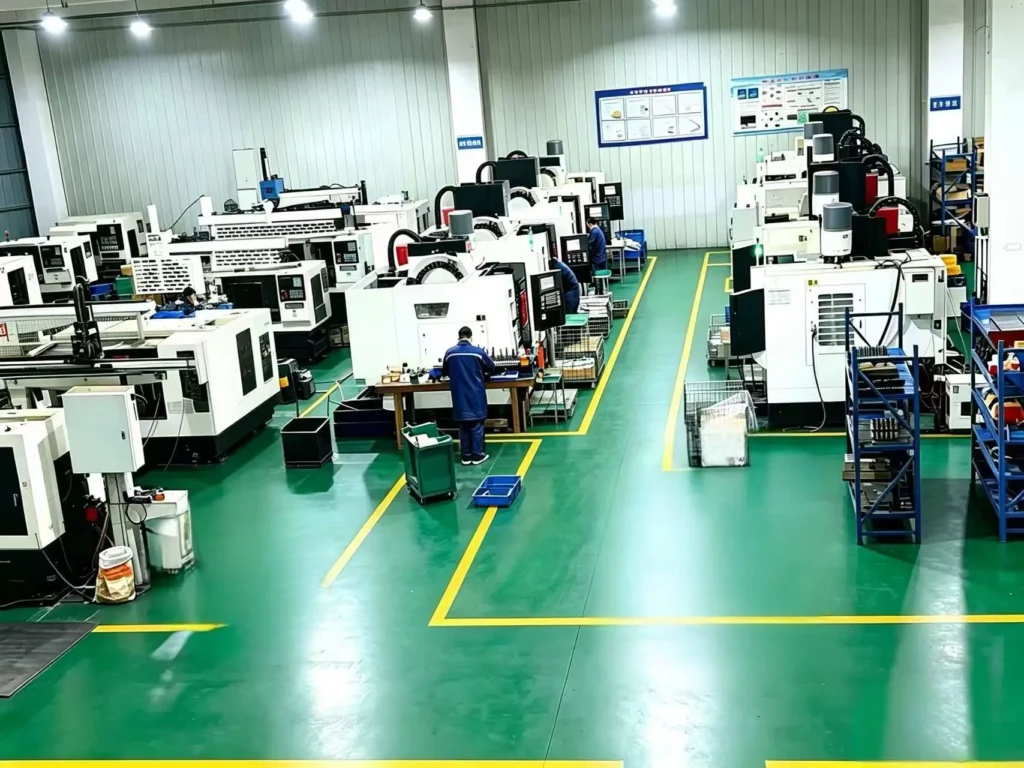
For overseas buyers sourcing gears and mechanical transmission components, working with a supplier that understands custom manufacturing requirements can simplify the procurement process.
Changzhou Qiming Precision Machinery Co., Ltd. focuses on precision machinery components and supports customers with customized manufacturing solutions.
Our main product and manufacturing categories include:
- Industrial gears
- Custom gear components
- Gear shafts
- Transmission shafts
- Gearbox-related components
- CNC machined mechanical parts
- Customized machinery components
Our Advantages for Overseas Buyers
1. Drawing-Based Custom Manufacturing
We support projects based on customer engineering drawings, samples, and technical specifications. This allows buyers to develop components according to their actual machinery requirements.
2. Multiple Mechanical Component Categories
Our product scope includes gears, gear shafts, transmission shafts, and other machinery components, providing opportunities to source related parts through one supplier.
3. CNC Machining Support
We support machining requirements involving CNC turning, milling, drilling, and related manufacturing processes according to component design and project needs.
4. OEM/ODM Flexibility
We understand that different industrial applications require different structures, materials, dimensions, and technical specifications. We focus on customized solutions rather than limiting buyers to standard catalog products.
5. Technical Communication
We welcome technical drawings and application information so that manufacturing requirements can be clarified before production begins.
6. Export-Oriented Service
We aim to support overseas customers with clear communication, quotation coordination, production updates, and export-related arrangements.
Our goal is to help international buyers develop suitable gears and precision mechanical components through a practical, drawing-based manufacturing approach.
What Information Should You Prepare Before Contacting a Chinese Gear Manufacturer?
To receive a more accurate quotation, prepare the following information:
| Required Information | Example |
|---|---|
| Product Type | Spur gear, helical gear, gear shaft |
| Engineering Drawing | PDF, DWG, DXF |
| 3D Model | STEP, STP, IGES |
| Material | 40Cr, 42CrMo, 4140 |
| Quantity | Prototype and annual demand |
| Gear Specifications | Module, number of teeth, pressure angle |
| Tolerances | Critical dimensional requirements |
| Heat Treatment | Carburizing, quenching, nitriding |
| Surface Treatment | As specified in the drawing |
| Application | Gearbox, reducer, industrial machinery |
Providing complete technical information helps manufacturers evaluate the machining process, production requirements, and quotation more accurately.
FAQ: Choosing a Gear Manufacturer in China
1. How do I find a reliable gear manufacturer in China?
Start by reviewing the supplier’s product range, manufacturing processes, material capabilities, quality management system, inspection methods, and experience with custom orders. Request a drawing review and sample evaluation before approving mass production.
2. What should I check before ordering gears from China?
Confirm the gear type, material, dimensions, tooth specifications, tolerances, heat treatment, inspection requirements, quotation details, and delivery terms.
3. What is the difference between a gear manufacturer and a trading company?
A gear manufacturer performs manufacturing operations directly or manages an identified production process, while a trading company primarily coordinates purchasing and sales. Some suppliers combine both functions, so buyers should clarify which processes are performed in-house and which are outsourced.
4. Can Chinese gear manufacturers produce custom gears?
Yes. Many manufacturers support OEM production based on 2D drawings, 3D CAD models, physical samples, and customer specifications. Actual capabilities depend on the supplier and gear design.
5. What information is needed for a gear quotation?
Typically, manufacturers need the engineering drawing, gear type, material, quantity, dimensions, accuracy requirements, heat treatment, surface treatment, and application details.
6. Should I request samples before placing a bulk order?
Yes, particularly for customized or critical transmission components. Sample evaluation helps verify dimensions, material, gear geometry, and assembly compatibility before mass production.
7. What standards should I consider when purchasing precision gears?
ISO 1328-1 is an important reference for cylindrical involute gear flank tolerance classification. Other requirements should be selected according to gear design, application, and customer specifications.
8. Can Changzhou Qiming Precision Machinery manufacture gears according to customer drawings?
Changzhou Qiming Precision Machinery Co., Ltd. supports customized manufacturing of gears, gear shafts, transmission shafts, and related machinery components. Overseas buyers are welcome to submit drawings and technical requirements for project evaluation.
Looking for a Custom Gear Manufacturer in China?
Choosing the right supplier is the first step toward building a reliable industrial supply chain.
At Changzhou Qiming Precision Machinery Co., Ltd., we support overseas customers looking for custom gears, gear shafts, transmission shafts, and CNC machined mechanical components.
Whether you are developing a new product, replacing an existing component, or sourcing a manufacturing partner for repeat orders, we welcome the opportunity to review your requirements.
Send us your engineering drawings, material specifications, and estimated order quantity.
Our team can review your project and discuss a suitable manufacturing solution based on your technical and commercial requirements.
Changzhou Qiming Precision Machinery Co., Ltd. — Custom Gears, Transmission Components, and Precision Machinery Manufacturing Solutions.